Directed by Elem Klimov, Come and See (Idi i smotri) is widely regarded as one of the most powerful and harrowing anti-war films ever made. Eschewing the traditional heroics of the genre, the film captures the “apocalyptic” reality of the Eastern Front during World War II, specifically the Nazi occupation of Belarus.
The Plot Synopsis
The story is seen through the eyes of Flyora (Aleksei Kravchenko), a 14-year-old boy eager to join the Belarusian resistance. After digging up a discarded rifle from an old trench—his “ticket” into the partisan ranks—he leaves his mother and sisters behind to fight for his country.
However, Flyora’s romanticized visions of war are instantly shattered. Rather than experiencing the glory of battle, he is thrust into a waking nightmare of scorched-earth tactics and systematic destruction. Separated from his unit during a German paratrooper raid, he wanders the countryside with a young nurse, Glasha (Olga Mironova), as they witness the absolute dehumanization of the local populace.
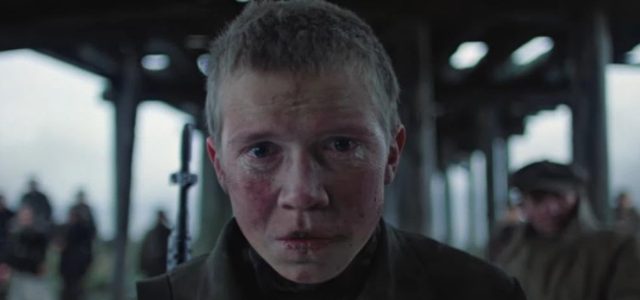
As Flyora moves from village to village, the film documents his physical and psychological transformation. The “boy” we see at the start is gradually replaced by a shell-shocked witness with the face of an old man, as he is forced to “come and see” the depths of human cruelty and the visceral reality of survival amidst genocide.
Key Cast and Crew
| Role | Name |
| Director | Elem Klimov |
| Flyora | Aleksei Kravchenko |
| Glasha | Olga Mironova |
| Kosach (Partisan Leader) | Liubomiras Laucevičius |
| Rubezh | Vladas Bagdonas |
| Screenwriters | Ales Adamovich & Elem Klimov |
Technical Mastery and Realism
-
The Lead Performance: Aleksei Kravchenko was a non-professional actor who was 14 at the time of filming. His performance is legendary for its raw intensity; the physical toll shown on his face throughout the movie was achieved through extreme conditions and authentic stress.
-
Sound and Vision: The film utilizes a revolutionary sound design (including the use of high-pitched ringing to simulate the tinnitus Flyora suffers after a bombing) and masterful Steadicam work to create a surreal, almost hallucinatory experience.
-
Historical Accuracy: The screenplay was co-written by Ales Adamovich, who was a teenage partisan in Belarus. Many of the atrocities depicted were based on real events, including the destruction of over 600 villages and their inhabitants.
Note: The title is taken from the Book of Revelation: “And when he had opened the fourth seal, I heard the voice of the fourth beast say, ‘Come and see.’ And I looked, and behold a pale horse: and his name that sat on him was Death, and Hell followed with him.”