
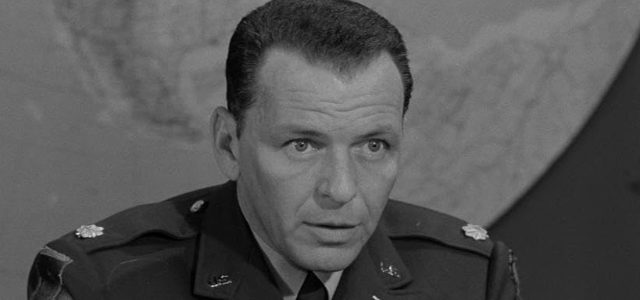
The Manchurian Candidate is a chilling, high-stakes political thriller released in 1962. Blending Cold War paranoia with elements of science fiction and psychological horror, it remains a hauntingly relevant exploration of brainwashing and the manipulation of the American political landscape.
The Synopsis
The plot centers on Major Bennett Marco, an intelligence officer who served during the Korean War. Years after his platoon was captured and later rescued, Marco begins to suffer from recurring, surreal nightmares that contradict his official memories of the conflict. In these dreams, his fellow soldier, Raymond Shaw, is not the war hero the government believes him to be, but something far more sinister.
As Marco investigates, he discovers that his entire unit was subjected to sophisticated brainwashing by Soviet and Chinese operatives during their captivity. Raymond Shaw has been programmed as a “sleeper agent”—a human weapon whose deadly impulses can be triggered by a specific, seemingly innocuous cue.
At the center of this web is Raymond’s domineering mother, Mrs. Iselin, who is orchestrating her son’s life and her husband’s political career with ruthless precision. Marco must race against time to break through his own mental fog and stop a conspiracy that reaches the highest levels of the United States government before a catastrophic assassination occurs.
Cast and Crew
| Role | Name |
| Director | John Frankenheimer |
| Major Bennett Marco | Frank Sinatra |
| Raymond Shaw | Laurence Harvey |
| Mrs. Iselin | Angela Lansbury |
| Eugenie Rose Chaney | Janet Leigh |
| Senator John Iselin | James Gregory |
Legacy & Trivia
-
The Performance: Angela Lansbury’s portrayal of Mrs. Iselin is frequently cited as one of the greatest cinematic villains of all time, earning her an Academy Award nomination.
-
The “Lost” Film: Following the assassination of John F. Kennedy in 1963, the film was largely withdrawn from circulation for decades. While rumors suggested Frank Sinatra pulled it out of respect or fear, it was primarily due to legal and distribution rights issues; it was finally re-released to massive acclaim in 1988.
-
Visual Style: Director John Frankenheimer used deep-focus photography and distorted angles to heighten the film’s sense of disorientation and psychological unease.
“Raymond Shaw is the kindest, bravest, warmest, most wonderful human being I’ve ever known in my life.” — The programmed refrain of the soldiers