
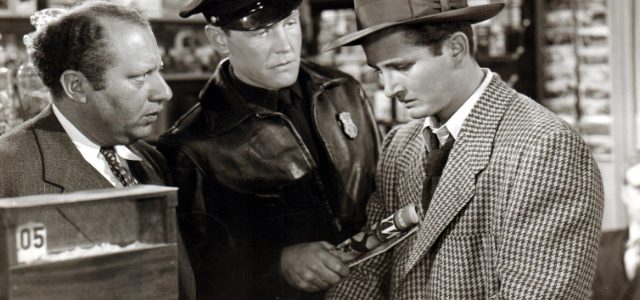
Directed by Joseph Losey, The Big Night is a raw, coming-of-age film noir that explores themes of masculinity, humiliation, and the loss of innocence. It stands as a notable example of the “psychological noir” trend of the early 1950s.
Synopsis
On the night of his seventeenth birthday, George La Main, a sensitive and somewhat sheltered teenager, witnesses a devastating act of violence: his father, a well-liked local bartender, is brutally beaten with a cane by a powerful sports columnist named Al Judge. To George’s horror and confusion, his father offers no resistance and refuses to explain why the assault took place.
Consumed by shame and a burning need for retribution, George retrieves a hidden pistol and ventures out into the city’s dark underbelly to find Al Judge. Over the course of one long, transformative night, George navigates a world of jazz clubs, boxing rings, and back alleys. Along the way, he encounters a variety of disillusioned urban characters who challenge his black-and-white view of morality. As he draws closer to his confrontation with Judge, George is forced to confront the complex truth behind his father’s past and the heavy cost of the revenge he seeks.
Key Cast and Crew
| Role | Name |
| Director | Joseph Losey |
| George La Main | John Drew Barrymore |
| Andy La Main | Preston Foster |
| Al Judge | Howard St. John |
| Marion Rostina | Joan Lorring |
| Dr. Lloyd Cooper | Philip Bourneuf |
| Francesca | Dorothy Comingore |
Notable Elements
-
The Lead Performance: A young John Drew Barrymore (father of Drew Barrymore) delivers an intense, jittery performance that captures the frantic energy of a boy trying to play a man’s game.
-
The Direction: Joseph Losey, who was blacklisted shortly after the film’s release, uses tight framing and shadowy locations to mirror the protagonist’s internal claustrophobia and confusion.
-
Social Commentary: The film is praised for its realistic depiction of the “outsider” experience and its refusal to provide easy, Hollywood-style answers to its central conflict.
Note: The screenplay was co-written by Hugo Butler, who, like Losey, was a victim of the Hollywood blacklist. Their shared sense of alienation is often cited as the source of the film’s unique, cynical edge.