
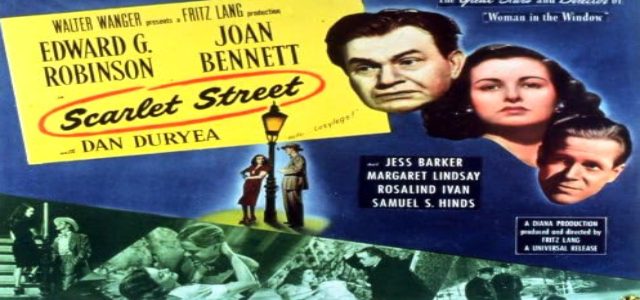
Directed by the master of German Expressionism and film noir, Fritz Lang, Scarlet Street is a devastatingly dark and cynical masterpiece. It reunited the primary cast of Lang’s previous hit, The Woman in the Window, but pushed the boundaries of the era’s censorship with a far bleaker exploration of obsession, manipulation, and moral decay.
The Synopsis
The story follows Christopher Cross, a mild-mannered, middle-aged cashier who has spent twenty years in a stifling, loveless marriage to a nagging woman. His only escape is his amateur oil painting, a hobby his wife ridicules. After a company dinner celebrating his years of service, Chris happens upon a young woman, Kitty “Lazy” March, being accosted on a street corner. He gallantly intervenes, striking the assailant with his umbrella.
Enchanted by the glamorous Kitty, Chris allows her to believe he is a wealthy, world-renowned artist to impress her. Kitty, however, is not the damsel in distress she appeared to be; she is a manipulative grifter under the thumb of her boyfriend, Johnny Prince, the man who was actually attacking her. Recognising Chris as a “mark,” Johnny pressures Kitty into seducing the old man to swindle him out of his supposed fortune. As Chris begins to embezzle funds from his employer to support Kitty’s lifestyle, his obsession spirals out of control. The film becomes a psychological trap, culminating in a series of shocking revelations where art, identity, and murder collide.
Cast & Crew
| Role | Name |
| Director | Fritz Lang |
| Christopher Cross | Edward G. Robinson |
| Kitty March | Joan Bennett |
| Johnny Prince | Dan Duryea |
| Adele Cross | Rosalind Ivan |
| Millie Ray | Margaret Lindsay |
Production Notes
-
The Noir Dream Team: This film is the pinnacle of the collaboration between Lang, Robinson, Bennett, and Duryea. Edward G. Robinson delivers one of his most heartbreaking performances, portraying a man whose late-life awakening leads to his utter ruin.
-
Censorship Battles: Due to its “sordid” themes and a plot point that directly challenged the Motion Picture Production Code (the Hays Code) regarding how criminals are punished, the film was initially banned in several major cities, including New York and Milwaukee.
-
Artistic Influence: The paintings used in the film, purportedly created by Chris Cross, were actually painted by John Decker, a well-known artist of the Hollywood “Bohemian” set. They play a crucial role in the plot’s commentary on the subjectivity of talent and fame.
-
Double Feature Ancestry: The film is an American remake of Jean Renoir’s 1931 French film La Chienne. While Renoir’s version focused more on social satire, Lang’s version is a deep dive into the shadows of the human subconscious, typical of his fatalistic worldview.