
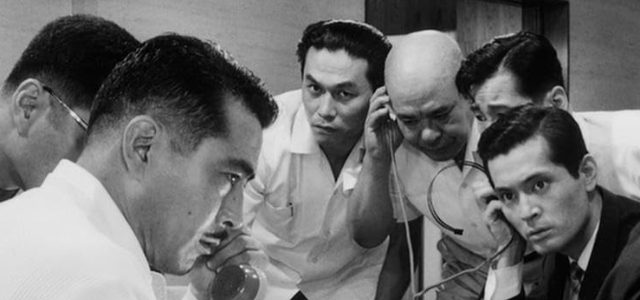
Directed by the master Akira Kurosawa, High and Low (1963)—originally titled Tengoku to Jigoku (Heaven and Hell)—is a relentless crime thriller that doubles as a profound social critique of post-war Japan.
The Premise
Kingo Gondo (played by Toshiro Mifune) is a powerful executive at National Shoe who has reached a precarious turning point. To secure his vision for the company against greedy stockholders, he has leveraged every yen he owns into a high-stakes corporate buyout.
His world is shattered by a phone call: a kidnapper claims to have snatched Gondo’s son and demands a ransom that will result in Gondo’s total financial ruin. However, the situation takes a bizarre and agonizing turn when it is discovered the kidnapper made a mistake—he has accidentally taken the son of Gondo’s chauffeur instead.
The kidnapper refuses to lower his price, forcing Gondo into a brutal moral dilemma. He must decide whether to sacrifice his career, his future, and his home to save a child who is not his own, or maintain his “High” status while allowing a “Low” life to be extinguished.
Key Cast and Crew
-
Director: Akira Kurosawa
-
Kingo Gondo: Toshiro Mifune
-
Inspector Tokura: Tatsuya Nakadai
-
The Kidnapper: Tsutomu Yamazaki
-
The Chauffeur (Aoki): Yutaka Sada
Why It Matters
-
A Tale of Two Halves: The film is structurally unique. The first half is a claustrophobic chamber piece set in Gondo’s modern apartment; the second half is an explosive, fast-paced police procedural that sweeps through the gritty streets and drug dens of Yokohama.
-
Tohoscope Mastery: Kurosawa uses the wide frame to perfection, often lining up characters to show the psychological pressure cooker they are trapped in.
-
The Villain: Unlike many thrillers of the era, the antagonist is driven by a visceral, burning resentment of the wealthy, adding a layer of tragic realism to the cat-and-mouse game.
“Why should I be the only one to sweat in hell?”