
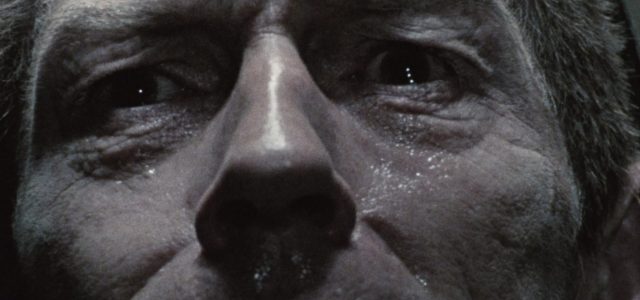
Directed by Michael Radford, this bleak and atmospheric adaptation of George Orwell’s seminal novel was famously filmed during the very months (April–June 1984) in which the story is set. It is widely praised for its “washed-out” visual style and its faithfulness to the source material’s oppressive tone.
The Plot
The story is set in a grim, perpetual-war version of London, located in the totalitarian superstate of Oceania. The world is dominated by The Party, an all-powerful entity led by the enigmatic figurehead Big Brother, who monitors every citizen through “telescreens.”
Winston Smith is a low-ranking civil servant at the Ministry of Truth. His job is to rewrite historical records to ensure they always align with the Party’s current propaganda. Despite the constant threat of the Thought Police, Winston begins to harbor subversive thoughts, secretly keeping a forbidden diary to vent his frustrations against a regime that outlaws individuality, history, and even love.
His quiet rebellion takes a dangerous turn when he begins an illicit affair with a fellow worker named Julia. Together, they attempt to find a sliver of humanity in a world designed to crush it, all while Winston suspects a high-ranking Inner Party member named O’Brien might be a secret ally in a rumored resistance movement.
Cast & Crew
| Role | Contributor |
| Director | Michael Radford |
| Winston Smith | John Hurt |
| O’Brien | Richard Burton |
| Julia | Suzanna Hamilton |
| Mr. Charrington | Cyril Cusack |
| Cinematography | Roger Deakins |
Key Highlights
-
Richard Burton’s Final Performance: This was the legendary actor’s last film role; he passed away shortly before the movie’s release, and the film is dedicated to him.
-
Cinematic Grit: Cinematographer Roger Deakins used a “bleach bypass” process to give the film a desaturated, grimy look that perfectly captures the decay of Oceania.
-
Soundtrack Controversy: The film features a famous (and at the time, polarizing) electronic score by the Eurythmics, though a traditional orchestral score by Dominic Muldowney also exists for certain versions.
Note: The film’s production was a race against time to ensure it was released in the actual year of 1984, adding a layer of meta-relevance to its premiere.