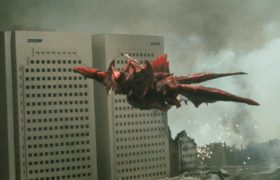
Directed by Takao Okawara, Godzilla vs. Destoroyah (1995) is the grand, emotional finale of the “Heisei” era. It serves as a narrative bookend to the entire franchise by bringing the series full circle to the events of the original 1954 film.

Directed by Takao Okawara, Godzilla vs. Destoroyah (1995) is the grand, emotional finale of the “Heisei” era. It serves as a narrative bookend to the entire franchise by bringing the series full circle to the events of the original 1954 film.
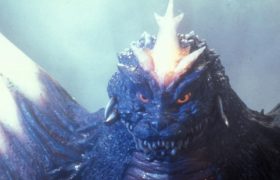
Directed by Kensho Yamashita, Godzilla vs. SpaceGodzilla (1994) is the penultimate film of the Heisei era. It introduces one of the most visually striking and powerful antagonists in the franchise’s history, raising the stakes to a cosmic level.
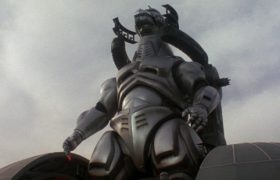
Directed by Takao Okawara, Godzilla vs. Mechagodzilla II (1993) is a pivotal chapter in the Heisei series. Despite the “II” in its Western title, it is not a sequel to the 1974 film, but a complete reimagining of the mechanical titan for a new era of biological and technological warfare.
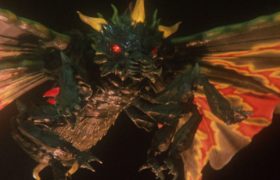
Directed by Takao Okawara, Godzilla and Mothra: The Battle for Earth (1992) revitalized one of the most beloved rivalries in cinema history. This entry in the Heisei series leans heavily into environmental themes, introducing a dark “shadow” counterpart to the Earth’s guardian.
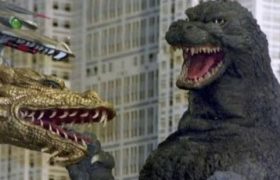
Written and directed by Kazuki Ōmori, Godzilla vs. King Ghidorah (1991) is a high-concept sci-fi epic that introduced time travel into the Heisei-era continuity. It serves as both an origin story for the King of the Monsters and a modernization of his most famous arch-nemesis.
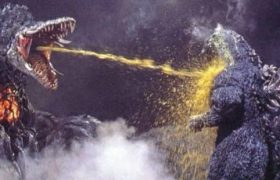
Directed by Kazuki Ōmori, Godzilla vs. Biollante (1989) is the second entry in the “Heisei” series. It is widely regarded as one of the most creative and visually stunning films in the franchise, blending sci-fi espionage with a tragic, Gothic horror undertone.
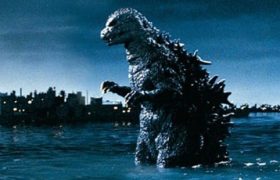
Directed by Koji Hashimoto (with R.J. Kizer directing the American footage), Godzilla 1985 serves as a direct sequel to the original 1954 classic, effectively ignoring the events of the previous 14 films. It famously brought the franchise back to its dark, nuclear-terror roots after a nine-year hiatus.
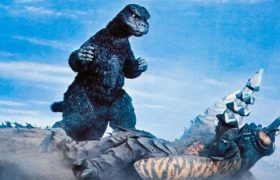
Directed by Jun Fukuda, Godzilla vs. Megalon (1973) is often cited as the pinnacle of the “campy” 1970s era of the franchise. It is perhaps best known to Western audiences for its appearance on Mystery Science Theater 3000 and for introducing one of the series’ most unique allies.
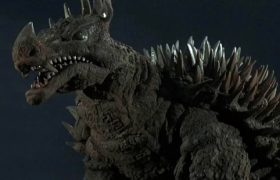
Directed by Jun Fukuda, Godzilla vs. Gigan (1972) is a colorful, action-packed entry that famously features Godzilla and his ally Anguirus “talking” to each other through comic-book-style speech bubbles and sound effects.
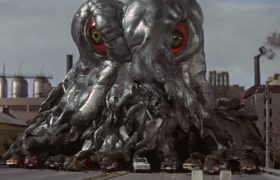
Directed by Yoshimitsu Banno, Godzilla vs. Hedorah (1971)—released in the US as Godzilla vs. the Smog Monster—is arguably the most psychedelic and tonally unique entry in the entire franchise. It re-imagines Godzilla not just as a protector of Japan, but as an ecological warrior.