
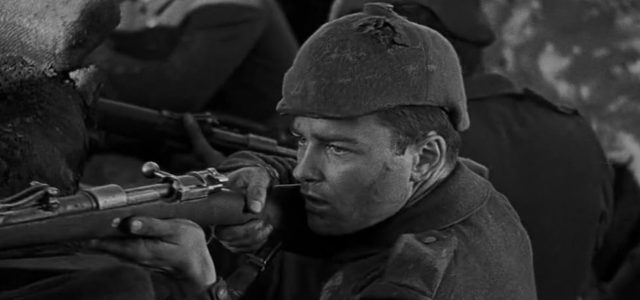
Released in 1930, All Quiet on the Western Front remains one of the most powerful and influential anti-war films in cinema history. Based on the landmark novel by Erich Maria Remarque, it offers a harrowing look at the physical and psychological toll of World War I from the perspective of those in the trenches.
The Synopsis
The story follows Paul Bäumer, a young German student who, along with his classmates, is swept up in a wave of patriotic fervor fueled by their schoolmaster’s nationalistic speeches. Eager to prove their bravery, the group enlists in the German Imperial Army.
However, their romanticized visions of glory are instantly shattered by the brutal reality of the front lines. Under the mentorship of a seasoned veteran named Kat, Paul and his friends must navigate the horrors of constant bombardment, the scarcity of food, and the soul-crushing experience of trench warfare. As the war drags on, the film explores the “Lost Generation”—young men who, even if they survive the bullets, find themselves permanently alienated from the civilian world they left behind.
Cast and Crew
| Role | Name |
| Director | Lewis Milestone |
| Paul Bäumer | Lew Ayres |
| Stanislaus “Kat” Katczinsky | Louis Wolheim |
| Himmelstoss | John Wray |
| Franz Kemmerich | Ben Alexander |
| Producer | Carl Laemmle Jr. |
Why It Matters
“We live in the trenches out there. We fight. We try not to be killed, but sometimes we are. That’s all.” — Paul Bäumer
The film is celebrated for its technical innovation, particularly its use of expansive, fluid camera movements during battle scenes which were revolutionary for the early “talkie” era. It was the first film to win Academy Awards for both Best Picture and Best Director.
Its message was so potent that it was famously banned in several countries, including Germany during the rise of the Nazi party, for its supposedly “defeatist” portrayal of the German military. Today, it stands as a timeless meditation on the futility of conflict.