
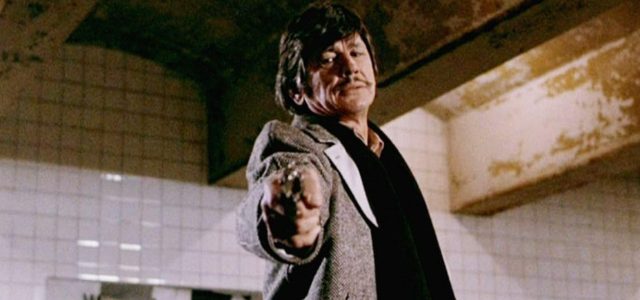
Death Wish is a gritty, controversial 1974 action-thriller that defined the “vigilante justice” subgenre. Released during a period of rising urban crime rates in the United States, the film tapped into a visceral public anxiety and remains a provocative look at the thin line between justice and vengeance.
The Synopsis
The story follows Paul Kersey, a mild-mannered, liberal architect living in New York City. Kersey’s world is shattered when three thugs break into his apartment, brutally attacking his wife and daughter. The tragedy leaves his wife dead and his daughter catatonic with trauma.
Disillusioned by the police’s inability to find the culprits and frustrated by the city’s atmosphere of fear, Kersey takes a business trip to Tucson, Arizona. There, he is exposed to a different philosophy regarding self-defense and is gifted a revolver. Upon returning to New York, Kersey undergoes a radical transformation. He begins patrolling the city’s subways and dark alleys at night, acting as bait for criminals. As he guns down would-be muggers, he becomes a media sensation—hailed as a hero by the public but hunted by a police inspector who suspects the “vigilante” is closer than they think.
Cast and Crew
| Role | Name |
| Director | Michael Winner |
| Paul Kersey | Charles Bronson |
| Inspector Frank Ochoa | Vincent Gardenia |
| Joanna Kersey | Hope Lange |
| Jack Toby | Steven Keats |
| Ames Jainchill | Stuart Margolin |
Production & Legacy
-
The Star: The film catapulted Charles Bronson to international superstital stardom, cementing his persona as the stoic, rugged man of action.
-
Early Appearances: Keep an eye out for a very young Jeff Goldblum in his film debut as one of the street punks.
-
The Soundtrack: The movie features a distinctive, atmospheric jazz-fusion score composed by legendary pianist Herbie Hancock.
-
Impact: Death Wish was a massive box-office success that spawned four sequels. While critics at the time debated its moral stance on violence and lawlessness, it is undeniably a landmark film of the “New Hollywood” era of the 1970s.
“If the police don’t protect the people, maybe they ought to do it themselves.” — Paul Kersey