
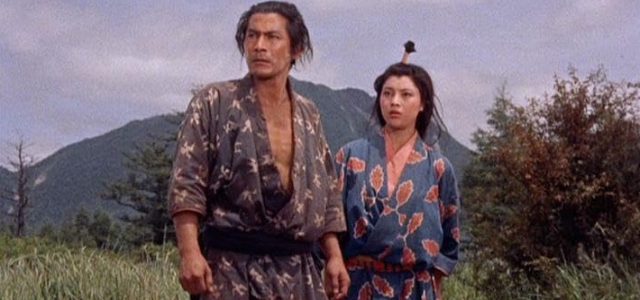
Directed by Hiroshi Inagaki, this film is the first installment of the acclaimed Samurai Trilogy. It is a vibrant, Eastmancolor epic based on the novel by Eiji Yoshikawa, depicting the early life of Japan’s most legendary swordsman. It famously won the Honorary Foreign Language Film Award (the precursor to the Best International Feature Oscar) at the 27th Academy Awards.
The Plot
Set at the turn of the 17th century, the story begins with a reckless and hot-headed youth named Takezo. Yearning for glory and escape from his provincial life, he and his friend Matahachi leave their village to fight in the monumental Battle of Sekigahara. However, they find themselves on the losing side, surviving the slaughter only to become hunted fugitives.
While Matahachi is led astray by the temptations of a mysterious woman and her daughter, Takezo returns home to his village as a wild, desperate man. His feral behavior and status as a deserter lead to a manhunt, but instead of being executed, he is captured by a wise and eccentric Buddhist monk named Takuan.
Recognizing the young man’s raw potential and untamed spirit, Takuan subjects Takezo to a brutal period of physical and spiritual discipline. The film follows Takezo’s painful transformation from a “wild animal” into a disciplined man of the sword, eventually earning the name that would ring through history: Musashi Miyamoto.
Cast & Crew
| Role | Contributor |
| Director | Hiroshi Inagaki |
| Takezo / Musashi Miyamoto | Toshiro Mifune |
| Otsu | Kaoru Yachigusa |
| Takuan Sōhō (The Monk) | Kuroemon Onoe |
| Matahachi Hon’den | Rentarō Mikuni |
| Akemi | Mariko Okada |
Key Highlights
-
Mifune’s Evolution: Toshiro Mifune, known for his explosive energy, gives a nuanced performance here, showing the transition from the unrefined Takezo to the more contemplative Musashi.
-
Visual Grandeur: The film was one of Japan’s early forays into color cinematography, using rich palettes to contrast the grimy reality of the battlefield with the serene beauty of the Japanese countryside.
-
Philosophical Underpinnings: Unlike more action-heavy martial arts films, Samurai I focuses heavily on the Zen Buddhist influence on the way of the sword, emphasizing that true mastery begins with self-control.
Note: This trilogy is often compared to the “Western” in its cultural significance, serving as a definitive look at the transition of Japan from a state of constant civil war to the more stable Edo period.