
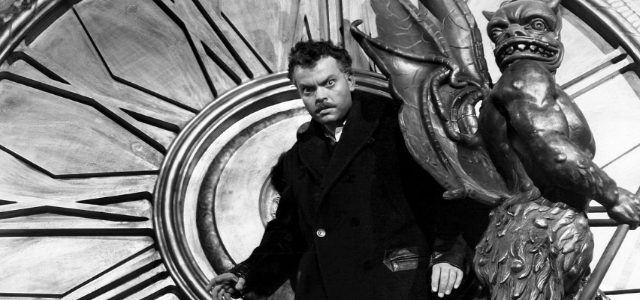
The Stranger is a taut, suspenseful film noir released in 1946. It is notable for being the only film directed by Orson Welles to become a genuine box-office success upon its release, and it remains a chilling exploration of how evil can hide behind a mask of respectability in small-town America.
The Synopsis
The story begins with Mr. Wilson, an agent of the United Nations War Crimes Commission, who is on a relentless hunt for Franz Kindler, a high-ranking Nazi mastermind who has vanished without a trace. Kindler has scrubbed his identity so thoroughly that no photographs of him exist; Wilson’s only lead is Kindler’s obsession with antique clocks.
Wilson follows a low-level Nazi subordinate to the idyllic town of Harper, Connecticut, where he suspects Kindler is hiding. There, he encounters Charles Rankin, a beloved and highly respected prep school professor who is about to marry Mary Longstreet, the daughter of a Supreme Court Justice.
Rankin is, in fact, Kindler in disguise, having integrated himself perfectly into the fabric of the community. As Wilson begins to close in, Rankin is forced to take increasingly desperate measures to maintain his cover and silence those who might expose his past. The film builds to a breathtaking climax in the town’s clock tower, serving as a grim reminder that the horrors of war can linger just beneath the surface of a peaceful life.
Cast and Crew
| Role | Name |
| Director | Orson Welles |
| Mr. Wilson | Edward G. Robinson |
| Charles Rankin / Franz Kindler | Orson Welles |
| Mary Longstreet | Loretta Young |
| Judge Adam Longstreet | Philip Merivale |
| Noah Spogel | Konstantin Shayne |
Legacy & Trivia
-
The “First” Footage: The Stranger was the first Hollywood film to use actual documentary footage from Nazi concentration camps to illustrate the gravity of Kindler’s crimes, a bold and somber choice for 1946.
-
Welles Behind the Camera: Orson Welles took the directing job partly to prove to studios that he could deliver a film on time and under budget—a reputation he struggled with after Citizen Kane and The Magnificent Ambersons.
-
Visual Style: While more traditional than his earlier experimental works, the film still features Welles’ signature deep-focus cinematography and striking use of shadows to create a sense of impending doom.
-
The Cuckoo Clock: The intricate, mechanical clock in the town square serves as a central motif, symbolizing Rankin’s obsession with order and his eventual undoing.
“Who’s a stranger? He’s a neighbor… and a very good one.” — A citizen of Harper