
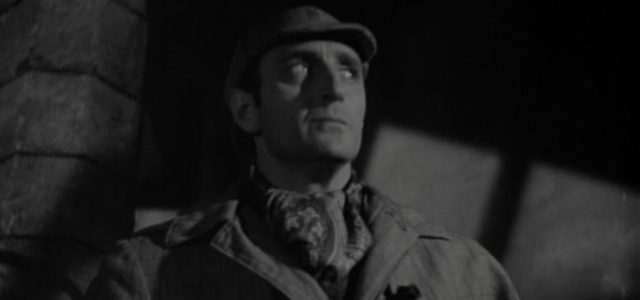
Directed by Alfred L. Werker, The Adventures of Sherlock Holmes (1939) is the second installment in the iconic film series starring Basil Rathbone. Unlike its predecessor, this film departs from the original Sir Arthur Conan Doyle stories to present an original, high-stakes battle of wits between the world’s greatest detective and his ultimate nemesis.
The Premise
The film opens with the acquittal of Professor Moriarty on a murder charge, thanks to a lack of evidence—a personal frustration for Sherlock Holmes. Shortly after, Moriarty visits Holmes at 221B Baker Street to boast of his next masterpiece: a crime so monumental and complex that it will stagger the British Empire and ruin Holmes’s reputation. What follows is a dual narrative where Holmes is distracted by a bizarre series of threats against a young socialite, while the Professor’s true, world-altering scheme unfolds in the shadows of the Tower of London.
The Cast
-
Basil Rathbone stars as Sherlock Holmes, delivering the definitive portrayal of the detective’s sharp intellect and restless energy.
-
Nigel Bruce plays Dr. John Watson, the loyal, bumbling, yet dependable companion.
-
George Zucco portrays Professor Moriarty, bringing a chilling, intellectual coldness to the role of the “Napoleon of Crime.”
-
Ida Lupino stars as Ann Brandon, the distressed heiress who seeks Holmes’s help after receiving a cryptic, deadly omen.
The Conflict
Moriarty employs a clever “distraction” strategy, leading Holmes on a chase involving a legendary family curse and strange, flutelike music. As Holmes digs into the mystery of the Brandon family, he begins to realize he is being played like a violin. The film builds toward a thrilling climax where the detective must race against time to prevent a daring robbery of the Crown Jewels and save the life of a woman caught in the crossfire.
Note: This film is credited with popularizing the phrase “Elementary, my dear Watson,” although the exact wording never appeared in Conan Doyle’s original books. It also marked the final time the series was set in the Victorian era before moving to a contemporary 1940s setting for the subsequent sequels.