
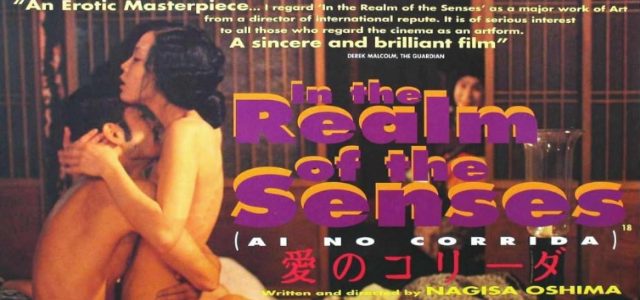
Directed by the visionary Nagisa Ōshima, In the Realm of the Senses (originally titled Ai no Korīda) remains one of the most controversial and discussed films in world cinema. Released in 1976, it is a haunting, claustrophobic exploration of the boundaries between passion and self-destruction.
The Premise
Set in Tokyo in 1936, against a backdrop of rising Japanese militarism, the story follows Sada Abe (played by Eiko Matsuda), a former prostitute working as a domestic servant at a local inn. She begins a torrid, illicit affair with the hotel’s owner, Kichi-zo Ishida (played by Tatsuya Fuji).
What starts as a mutual attraction rapidly evolves into an all-consuming obsession. As the world outside edges toward war, the two lovers withdraw into a private universe of sensory indulgence. They abandon their social responsibilities and families, isolating themselves in tea houses and hotel rooms to push the limits of their physical connection.
Themes and Style
The film is noted for its:
-
Extreme Realism: Ōshima chose to depict sexual intimacy with unsimulated graphic detail, leading to the film being seized by customs and censored in various countries for decades.
-
Escapism: The protagonists’ descent into hedonism serves as a radical, desperate rejection of the rigid, oppressive society surrounding them.
-
Fatalism: The narrative explores the “death drive”—the idea that ultimate pleasure is inextricably linked to ultimate destruction.
Key Credits
| Role | Name |
| Director | Nagisa Ōshima |
| Sada Abe | Eiko Matsuda |
| Kichi-zo Ishida | Tatsuya Fuji |
| Cinematography | Hideo Itoh |
Note: Due to its explicit content, the film is intended for mature audiences only. It is based on the true story of Sada Abe, a case that captivated and shocked the Japanese public in the 1930s.