
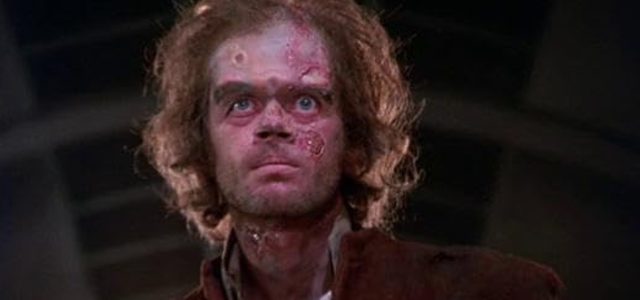
Frankenstein: The True Story (1973) is an epic, three-hour telefilm that remains one of the most literate and visually stunning adaptations of Mary Shelley’s novel. Directed by Jack Smight and co-written by acclaimed novelist Christopher Isherwood, the film eschews the “bolt-necked monster” tropes of earlier cinema to return to the philosophical and tragic roots of the source material.
The Plot
The story follows young Victor Frankenstein, a brilliant medical student devastated by the death of his brother. His grief turns into a dangerous obsession with conquering mortality. Under the tutelage of the cynical and mysterious Dr. Henri Clerval, Victor discovers a way to reanimate dead tissue using solar power and chemical baths.
Unlike other versions, the “Creature” begins his life as a physically perfect, handsome young man with a childlike mind. Victor is initially thrilled, treating the being as a protégé and a friend. However, the process is unstable; soon, the Creature begins to physically degenerate, losing his beauty and becoming an object of horror to his creator. Rejected by Victor and manipulated by the sinister Dr. Polidori, the increasingly bitter and intelligent Creature embarks on a vengeful quest to destroy everything Victor holds dear, leading to a tragic confrontation in the frozen wastes of the Arctic.
Cast & Crew
-
Director: Jack Smight
-
Lead Actors:
-
Leonard Whiting as Victor Frankenstein
-
Michael Sarrazin as The Creature
-
James Mason as Dr. Polidori
-
-
Supporting Cast:
-
David McCallum as Dr. Henri Clerval
-
Jane Seymour as Agatha / Prima
-
Nicola Pagett as Elizabeth Fanschawe
-
Sir Michael Redgrave as The DeLacey Family Patriarch
-
Sir Ralph Richardson as Mr. Lacey
-
Vibe & Style
The film is celebrated for its high production values and an incredible ensemble of British acting royalty. It introduces the character of Dr. Polidori (named after the real-life doctor who was with Mary Shelley when she wrote the novel), who serves as a sophisticated, campy villain. By focusing on the “lost beauty” of the Creature, the film emphasizes the psychological horror of rejection and the ethical vanity of the creator.