
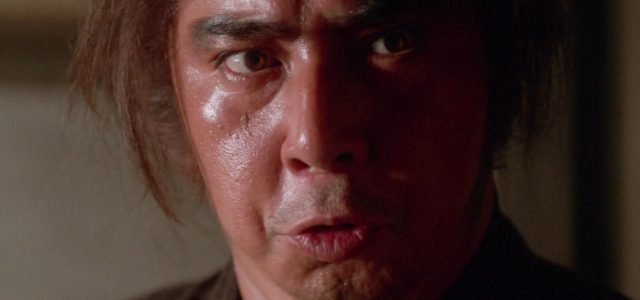
Lone Wolf and Cub: Baby Cart to Hades (1972)
Directed by Kenji Misumi, this is the third—and arguably the most visually stylish—entry in the legendary Lone Wolf and Cub saga (also known as the Kozure Ōkami series). Adapted from the iconic manga by Kazuo Koike and Goseki Kojima, it is a masterclass in “chanbara” (sword fighting) cinema, blending poetic imagery with shocking bursts of violence.
The Plot
Ogami Ittō, the disgraced former Shogun’s executioner, continues his journey through feudal Japan as an assassin-for-hire. Traveling “the Road to Hell” with his young son, Daigorō, in a heavily armed wooden baby cart, he lives by the code of the Meifumadō.
In this installment, Ittō’s path crosses with a group of dishonored rōnin and a tragic woman who has been sold into a life of misery. His stoic sense of honor is put to the test when he is hired to eliminate a corrupt official, but find himself caught in the middle of a complex web of betrayal involving a local clan.
The film culminates in a massive, legendary confrontation where Ittō must face an entire army. Armed with his “Dotanuki” battle sword and the hidden gadgets within the baby cart, he wages a one-man war against a tide of enemies. Meanwhile, the shadow of his ultimate rivals, the Yagyū Clan, continues to loom large as they plot to finally end the Lone Wolf’s defiance.
Cast & Crew
| Role | Contributor |
| Director | Kenji Misumi |
| Ogami Ittō | Tomisaburō Wakayama |
| Ogami Daigorō | Akihiro Tomikawa |
| Kanbei Sayaka | Go Kato |
| Torizō | Yuko Hama |
| Producer | Shintarō Katsu |
Key Highlights
-
Wakayama’s Physicality: Tomisaburō Wakayama, a real-life master of martial arts, performs his own stunts and swordplay with a speed and ferocity that remains unmatched in the genre.
-
The Baby Cart: This film features some of the most creative uses of the cart’s hidden weaponry, including its transformation into a mobile tactical unit during the finale.
-
Cinematographic Beauty: Director Kenji Misumi uses striking compositions, often contrasting the bright red of blood against stark, natural landscapes to create a “comic book” aesthetic brought to life.
Note: This film was a primary source for the 1980 Americanized cult classic Shogun Assassin, which edited together the first two films of the series (with a heavy emphasis on the action sequences from this specific entry).