
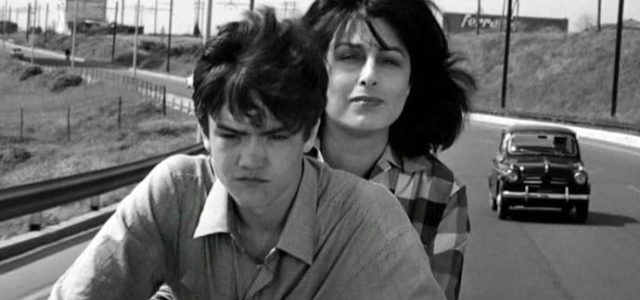
Directed by the visionary Pier Paolo Pasolini, Mamma Roma (1962) is a cornerstone of Italian cinema that bridges the gap between post-war Neorealism and the more stylized, operatic approach of Pasolini’s later works. It features one of the most powerful performances in the history of film by the legendary Anna Magnani.
The Premise
Mamma Roma (Magnani) is a middle-aged sex worker in Rome who sees a chance to finally rewrite her life’s story. When her pimp, Carmine, marries a country girl and releases Mamma Roma from her “obligations,” she seizes the opportunity to go respectable. She moves to a middle-class neighborhood, sets up a fruit stall in a bustling market, and reunites with her teenage son, Ettore, who has been living in the countryside and knows nothing of her past.
Her primary obsession is to provide Ettore with a “respectable” bourgeois life—a job, a good home, and social standing. However, Ettore is a disenfranchised, aimless youth who falls in with a local gang of petty thieves and becomes infatuated with a neighborhood girl. As Mamma Roma struggles to push her son toward a future he doesn’t seem to want, the shadows of her past—and the return of the predatory Carmine—threaten to dismantle the fragile new life she has built.
Key Cast and Crew
-
Director: Pier Paolo Pasolini
-
Mamma Roma: Anna Magnani
-
Ettore: Ettore Garofolo
-
Carmine: Franco Citti
-
Bruna: Silvana Corsini
Why It Matters
-
Anna Magnani’s Power: Known for her raw, earthy intensity, Magnani brings a volcanic energy to the role. Her long, laughing walks through the Roman night are among the most famous sequences in cinema.
-
Religious Imagery: Pasolini, a Marxist and an atheist with a fascination for the sacred, famously uses visual compositions inspired by Renaissance paintings (particularly the works of Mantegna and Caravaggio) to frame his gritty, street-level characters.
-
The Urban Landscape: The film captures the “New Rome”—the stark, concrete apartment blocks of the suburbs that represent both the promise of progress and the coldness of modern isolation.
“I will make a gentleman of you, Ettore. Even if I have to die doing it.”
Mamma Roma is a tragic, soaring exploration of a mother’s fierce love and the impossible struggle to escape one’s social destiny in a world that rarely offers second chances.