
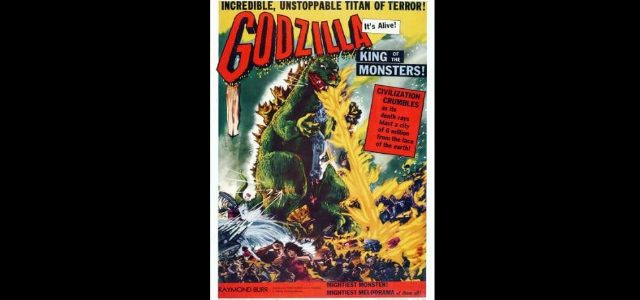
Co-directed by Ishirō Honda and Terry O. Morse, Godzilla, King of the Monsters! (1956) is the landmark American localization of the original 1954 Japanese film Gojira. It is the version that introduced the atomic leviathan to the Western world.
The Premise
The story is told through the eyes of Steve Martin, an American foreign correspondent who stops in Tokyo for a layover. His routine trip turns into a nightmare when a series of mysterious shipwrecks and a trail of radioactive destruction lead to the discovery of a prehistoric, 400-foot-tall reptilian monster. Martin finds himself trapped in the city as it becomes a target for the beast, which has been awakened and mutated by underwater hydrogen bomb tests.
The Conflict
As the military proves powerless against the monster’s “atomic breath” and impenetrable hide, the survival of Japan rests on a desperate scientific gamble. Martin follows the efforts of local authorities and scientists who are torn between their duty to save the world and the ethical implications of using a weapon even more terrifying than the one that created the monster in the first place:
-
Steve Martin (Raymond Burr): A witness and reporter who provides a grounded, outsider perspective on the unfolding apocalypse.
-
Dr. Serizawa (Akihiko Hirata): A reclusive scientist who has accidentally discovered a horrific chemical substance known as the Oxygen Destroyer. He is terrified that if his invention is used once, world powers will force him to turn it into a weapon of war.
The narrative shifts between visceral scenes of urban destruction and the quiet, high-stakes moral dilemma of whether to unleash a new horror to stop an existing one.
Key Cast and Crew
| Role | Personnel |
| Directors | Ishirō Honda & Terry O. Morse |
| Steve Martin | Raymond Burr |
| Dr. Yamane | Takashi Shimura |
| Dr. Serizawa | Akihiko Hirata |
| Emiko Yamane | Momoko Kōchi |
| Godzilla (Suit Actor) | Haruo Nakajima |
Why It’s Historically Significant
This version is unique because it meticulously spliced new footage of Raymond Burr into the original Japanese production. By using body doubles and clever editing, the American director made it appear that Burr was interacting directly with the original Japanese cast. While it toned down some of the original’s overt political messaging, it retained the grim, somber tone that set the standard for the kaiju genre.