
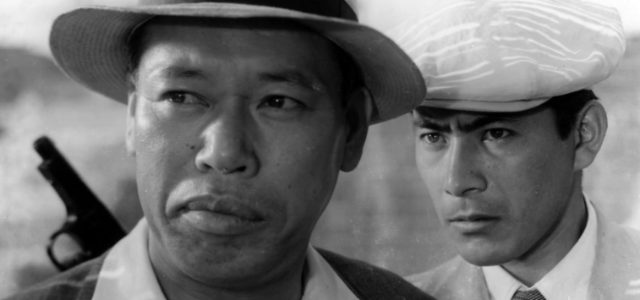
Original Title: Nora inu
Directed by the legendary Akira Kurosawa, Stray Dog is a gripping crime thriller and a foundational “buddy cop” movie. Set against the sweltering, desperate backdrop of post-World War II Tokyo, it is as much a high-stakes police procedural as it is a vivid social document of a nation struggling to rebuild its identity.
The Premise
The story follows Murakami, a young, idealistic homicide detective who is robbed of his Colt service pistol on a crowded trolley during a record-breaking heatwave. Stricken with intense guilt and shame—fearing that his weapon will be used to commit violent crimes—Murakami descends into the city’s seedy underworld to track it down.
He is soon paired with Sato, a seasoned, pragmatic veteran detective. Together, they navigate the black markets, baseball stadiums, and slums of Tokyo. As they close in on a desperate criminal who is using the stolen gun, Murakami begins to realize the thin line that separates his own life from that of the man he is hunting. The film masterfully explores the “stray dog” metaphor: the idea that in a broken society, some people become protectors of the law, while others—under the same pressures—turn into rabid predators.
Key Cast and Crew
This film marks one of the earliest and most vital collaborations between Kurosawa and his two most frequent stars.
| Role | Name |
| Director | Akira Kurosawa |
| Detective Murakami | Toshiro Mifune |
| Detective Sato | Takashi Shimura |
| Harumi Namiki (Showgirl) | Keiko Awaji |
| Shinji Yusa (The Suspect) | Isao Kimura |
Why It’s a Masterpiece
-
Atmospheric Tension: Kurosawa famously used actual footage of war-torn Tokyo to enhance the realism. You can almost feel the stifling, oppressive heat through the screen, which mirrors the mounting desperation of the characters.
-
The Mifune-Shimura Dynamic: The chemistry between the hot-headed, obsessive Mifune and the calm, fatherly Shimura provides the emotional heartbeat of the film.
-
Cinematic Innovation: The film features a famous ten-minute montage of Murakami wandering through the Tokyo ruins; it is a groundbreaking piece of visual storytelling that captures the exhaustion and grit of the era.