
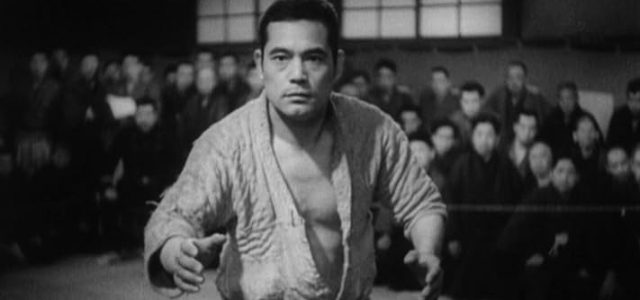
Directed by the legendary Akira Kurosawa, Sanshiro Sugata (1943) marks the directorial debut of one of cinema’s greatest masters. Based on the novel by Tsuneo Tomita, it is a quintessential martial arts tale that explores the spiritual and physical discipline required to master a craft.
The Plot
Set during the Meiji era in the late 19th century, the story follows Sanshiro Sugata, a talented but headstrong young man who travels to the city to learn jujutsu. After witnessing a demonstration of the burgeoning martial art of Judo—led by the calm and philosophical master Shogoro Yano—Sanshiro is awestruck by its grace and efficiency. He abandons his former ambitions to become Yano’s disciple.
However, Sanshiro’s journey is not an easy one. While he possesses immense natural strength, he lacks emotional maturity and the “spiritual core” necessary for true mastery. After a period of soul-searching and a grueling lesson in humility involving a cold temple pond, he begins to transform into a true martial artist. His growth is eventually put to the ultimate test when he is challenged by rival jujutsu masters, culminating in a legendary showdown on a windswept plateau against his most formidable foe, Higaki.
Key Information
-
Director: Akira Kurosawa
-
Lead Actor: Susumu Fujita (as Sanshiro Sugata)
-
Supporting Cast: Denjirō Ōkōchi (as Shogoro Yano), Takashi Shimura, and Yukiko Todoroki.
Why It’s a Cinematic Milestone
-
The Birth of a Visionary: Even in this debut, Kurosawa’s signature style is evident—particularly his use of weather (the wind in the final duel) to mirror the internal emotions of his characters.
-
Judo vs. Jujutsu: The film serves as a dramatized history of the transition from traditional, combat-focused jujutsu to the more modernized, spiritual practice of Kodokan Judo.
-
Visual Innovation: Kurosawa utilizes innovative editing techniques, such as the famous “wipes” and slow-motion sequences, which would later become staples of his international hits like Seven Samurai.
Note: Because the film was produced during WWII, it faced heavy censorship from the Japanese government at the time. Despite several minutes of footage being lost to these cuts, the film remains a powerful and coherent testament to Kurosawa’s early genius.