
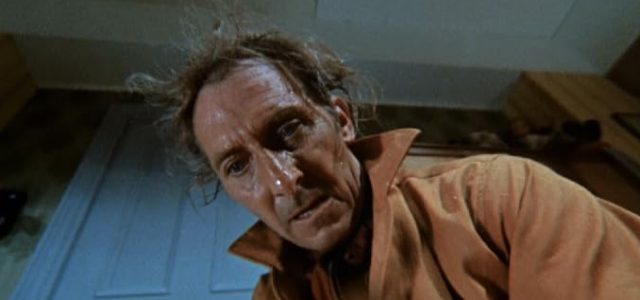
Directed by Robert Hartford-Davis, Corruption is a jarring, neon-soaked British horror film that takes the classic “mad scientist” trope and drags it into the cynical, swinging sixties. It is often remembered for being significantly more violent and sexually charged than the typical gothic fare of the era.
The Plot Synopsis
Sir John Rowan (Peter Cushing) is a brilliant and prestigious London surgeon at the height of his career. He is deeply in love with his beautiful younger fiancée, Lynn (Sue Lloyd), a high-fashion model. However, their idyllic life is shattered during a chaotic party when a fight breaks out, causing a hot stage lamp to fall and horribly disfigure Lynn’s face.
Consumed by guilt and desperate to restore her beauty, Rowan retreats to his secluded coastal laboratory. He discovers a controversial procedure involving pituitary gland transplants that can temporarily regenerate damaged tissue. The catch? The glands must be fresh—extremely fresh.
As Lynn becomes increasingly obsessed with her reflection and demands more treatments, Rowan is forced to abandon his Hippocratic Oath. He descends into a spiral of murder, stalking the streets and beaches to harvest the biological materials needed to keep his fiancée’s “beauty” alive. The film explores the dark irony of a man dedicated to healing who becomes a prolific killer to satisfy the vanity of the woman he loves.
Key Cast and Crew
| Role | Name |
| Director | Robert Hartford-Davis |
| Sir John Rowan | Peter Cushing |
| Lynn Nolan | Sue Lloyd |
| Steve Harris | Noel Trevarthen |
| Groper | David Lodge |
| Screenwriters | Donald & Derek Ford |
Style and Tone
-
The “Modern” Horror: Moving away from the castles of Hammer Films, Corruption uses contemporary London settings, flashy 1960s fashion, and a sharp, jazzy score to create a sense of immediate, urban unease.
-
Peter Cushing’s Performance: Known for playing the heroic Van Helsing, Cushing delivers a haunting performance here as a sympathetic but ultimately monstrous man driven to the brink by love and obsession.
-
Graphic Intensity: For 1968, the film was noted for its gore. Because of this, two versions were produced: a standard version for British and American audiences, and a much more explicit “continental” version for European markets.
Note: Despite its title and plot, the film is less about supernatural evil and more about the “corruption” of a good man’s soul under the pressure of intense psychological trauma.
How do you feel about these mid-century British “medical” horrors—do they creep you out more than the supernatural ones?