
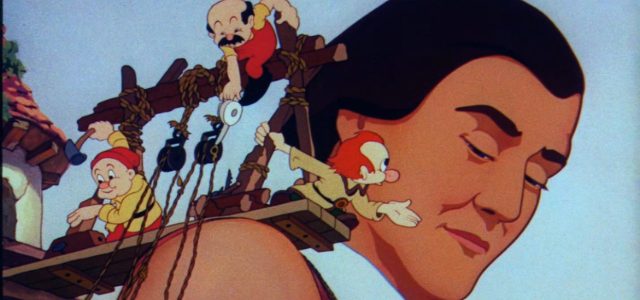
Directed by Dave Fleischer and produced by Max Fleischer, Gulliver’s Travels (1939) was Hollywood’s second ever full-length animated feature film. Created as a direct response to the success of Disney’s Snow White, this vibrant musical reimagines Jonathan Swift’s classic satire as a whimsical, family-friendly adventure.
The Premise
The story begins with Lemuel Gulliver, a sailor who is shipwrecked during a violent storm and washed ashore on the mysterious island of Lilliput. While Gulliver lies unconscious on the beach, he is discovered by the island’s inhabitants—people who are only a few inches tall. The Lilliputians, led by their frantic town crier Gabby, view the “giant” as a terrifying mountain of a man. However, Gulliver’s arrival comes at a precarious time: Lilliput is on the verge of war with the neighboring kingdom of Blefuscu over a trivial dispute regarding their respective national anthems.
The Voices
While the film is animated, it features a talented cast of vocal performers and singers:
-
Sam Parker provides the voice (and served as the live-action rotoscope model) for Lemuel Gulliver.
-
Pinto Colvig (famous as the voice of Goofy and Grumpy) voices the eccentric and excitable Gabby.
-
Jack Mercer (the voice of Popeye) and Jessica Dragonette provide the singing voices for the star-crossed lovers, Prince David and Princess Glory, whose marriage is caught in the middle of the international conflict.
The Conflict
Gulliver eventually awakens and, rather than being a conqueror, becomes a peacekeeper. He must navigate the tiny complexities of Lilliputian politics while helping King Little and King Bombo realize the absurdity of their feud. As the Blefuscu fleet prepares for a naval invasion, Gulliver uses his massive size to intervene, all while the two kingdoms’ young royals hope the “Giant” can help bring a musical harmony back to their divided lands.
Technical Highlights
-
Rotoscoping: The film is notable for using the rotoscope technique on Gulliver, giving him fluid, realistic human movement that contrasts sharply with the “cartoony” and caricatured look of the Lilliputians.
-
The Music: The film features the Academy Award-nominated song “Faithful Forever,” which underscores the romantic subplot between the two kingdoms.