
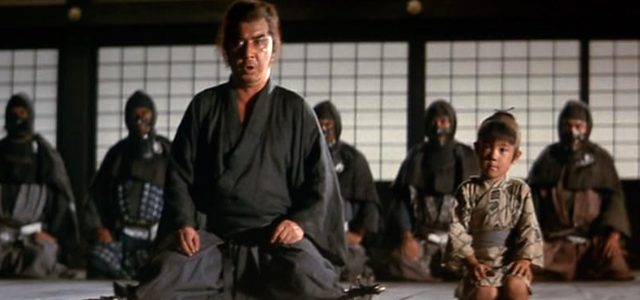
Directed by Kenji Misumi, who returned to the helm for this fifth installment, Baby Cart in the Land of Demons (also known as Kozure Ōkami: Meifumadō) is often regarded as one of the most plot-driven and spiritually focused entries in the series. It further refines the “Road to Hell” philosophy that governs the lives of the wandering assassin and his son.
The Plot
The stoic Ogami Ittō is presented with a unique challenge: he is approached by five separate messengers from the Kuroda clan, each of whom tests his skills in mortal combat. Each messenger carries a portion of his fee and a piece of a secret mission. Upon defeating them, Ittō learns he has been hired to assassinate a high-ranking lord and a “young prince” who is being hidden away—a task that challenges even his cold-blooded professional detachment.
The mission takes Ittō and Daigorō into a territory rife with political intrigue and “demonic” deception. While Ittō navigates the trap-filled path to his target, the young Daigorō has a significant subplot of his own, demonstrating his burgeoning stoicism and courage when he is separated from his father and captured by a vengeful street performer.
As always, the shadow of the Yagyū Clan looms. Yagyū Retsudō continues his relentless pursuit, using the Kuroda clan’s internal strife as a way to corner Ittō. The film culminates in a massive battle where the baby cart’s hidden arsenal is unleashed against a gauntlet of monks and samurai in a spectacular display of tactical choreography.
Cast & Crew
| Role | Contributor |
| Director | Kenji Misumi |
| Ogami Ittō | Tomisaburō Wakayama |
| Ogami Daigorō | Akihiro Tomikawa |
| Yagyū Retsudō | Minoru Ōki |
| Shimagami Kanbei | Michiyo Yasuda |
| Screenwriter | Kazuo Koike (Manga Creator) |
Key Highlights
-
The “Five Messengers” Intro: The opening sequence is a fan favorite, showing Ittō’s absolute mastery of the sword as he systematically collects his “briefing” from five doomed warriors.
-
Daigorō’s Development: This entry highlights the “Cub” more than previous films, showcasing the child’s incredible resilience and the strange, silent respect he earns from those who intend to do him harm.
-
High Production Value: With Misumi back in the director’s chair, the film returns to the high-contrast, artistic framing and rhythmic editing that defined the first three movies.
Note: This film delves deeper into the concept of Meifumadō (The Buddhist Hell), suggesting that Ittō and Daigorō have moved beyond the human realm and now exist in a purgatory of constant combat.