
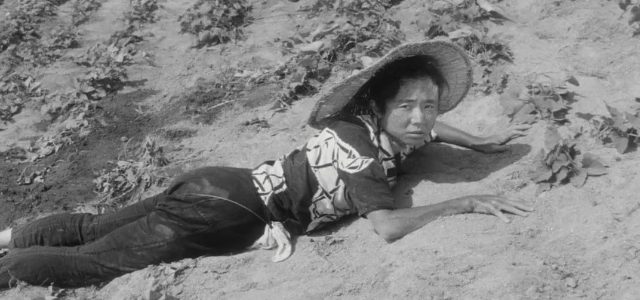
Directed by Kaneto Shindō, The Naked Island (Hadaka no Shima) is a 1960 masterpiece of visual storytelling. It is most famous for its radical narrative choice: though it is not a “silent film” in the traditional sense (it features a lush score and ambient sounds), there is not a single word of spoken dialogue throughout its entire 96-minute runtime.
The Premise
The film follows a small family—a husband, a wife, and their two young sons—who are the sole inhabitants of a tiny, arid island in Japan’s Seto Inland Sea. Their entire existence is defined by a singular, grueling cycle of labor. Because the island has no source of fresh water, the parents must row a small boat to a neighboring island, fill large wooden buckets, and row back several times a day.
The Conflict
The “conflict” is not found in traditional plot twists, but in the relentless, Sisyphean struggle against nature. The family must carry the heavy water buckets up steep, treacherous paths to manually water each individual plant in their parched fields.
The film captures the extreme discipline required for survival:
-
The Physical Toll: The constant risk of spilling even a drop of the precious water they labored to bring across the sea.
-
The Isolation: The stark contrast between their primitive, agrarian life and the modern, mechanized Japan visible on the horizon.
-
The Breaking Point: When an unexpected tragedy strikes the family, their stoic endurance is pushed to its absolute limit, forcing them to confront the near-impossible weight of their daily toil.
Key Cast and Crew
| Role | Personnel |
| Director | Kaneto Shindō |
| Toyo (The Mother) | Nobuko Otowa |
| Senta (The Father) | Taiji Tonoyama |
| Composer | Hikaru Hayashi |
Why It’s a Classic
The Naked Island was a daring experiment that saved Shindō’s production company from bankruptcy. By stripping away dialogue, the film becomes a universal poem about human perseverance. The haunting, repetitive musical theme by Hikaru Hayashi provides the emotional “voice” of the characters, while the black-and-white cinematography captures the harsh beauty of the landscape. It is widely considered one of the most powerful “pure cinema” experiences ever created.