
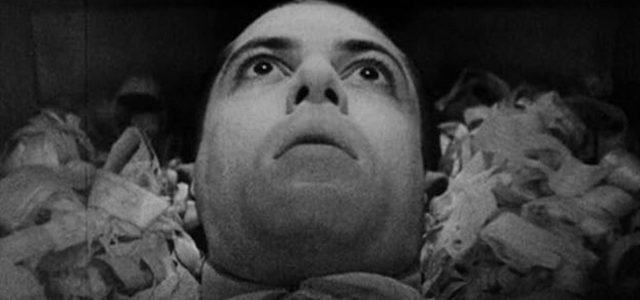
Directed by the Danish master of atmospheric cinema, Carl Theodor Dreyer, Vampyr is a cornerstone of the horror genre. Unlike the theatrical, Dracula-style films of the same era, Vampyr is a disorienting, dreamlike experience that relies on psychological unease and innovative visual effects rather than traditional scares.
The Synopsis
The story follows Allan Gray, a young man whose obsessive study of devil worship and vampires has left him in a state of perpetual daydreaming. His wanderings lead him to a secluded inn in the French village of Courtempierre. The atmosphere is immediately thick with the supernatural: shadows detach themselves from their owners, and a frantic old man enters Allan’s room at night, leaving behind a package to be opened only upon his death.
When the old man is mysteriously murdered, Allan finds himself drawn to the man’s estate, where one of the daughters, Léone, is wasting away from a strange illness. As Allan investigates, he discovers that the village is under the thumb of a malevolent, centuries-old presence—a vampire who operates not through fangs and capes, but through a network of living accomplices, including a local doctor. The narrative blurs the line between reality and hallucination, culminating in a terrifying sequence where Allan experiences his own burial while still alive, peering out from a window in his coffin at the world of the “undead.”
Cast & Crew
| Role | Name |
| Director | Carl Theodor Dreyer |
| Allan Gray | Julian West (Baron Nicolas de Gunzburg) |
| Léone | Maurice Schutz |
| Gisèle | Rena Mandel |
| The Vampire (Marguerite Chopin) | Henriette Gérard |
| The Village Doctor | Jan Hieronimko |
Production Notes
-
Visual Innovation: To achieve the film’s ghostly, washed-out look, Dreyer and his cinematographer Rudolph Maté famously filmed through a piece of black gauze held in front of the lens. This created a “foggy” texture that makes the entire film feel like a waking nightmare.
-
Non-Professional Actors: Most of the cast were not professional actors. The lead, Julian West, was actually a French aristocrat (Baron Nicolas de Gunzburg) who financed the film in exchange for the starring role. This lends the characters an eerie, stiff naturalism that fits the film’s surreal tone.
-
Sound and Silence: Though it was Dreyer’s first sound film, it was shot as a silent movie with very little dialogue. This allows the haunting score and the innovative use of off-screen sound effects to heighten the sense of dread.
-
Shadow Play: The film is renowned for its “rebellious shadows”—sequences where shadows move independently of the people or objects casting them—representing a world where the laws of physics have been subverted by evil.