
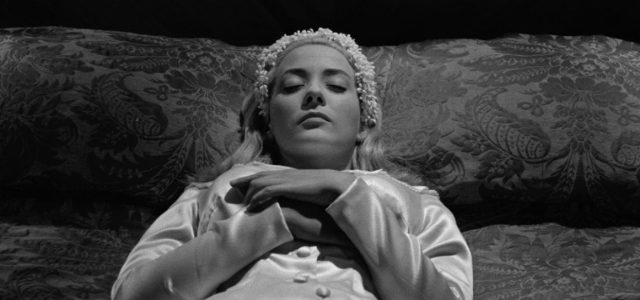
Directed by the master of cinematic surrealism, Luis Buñuel, Viridiana (1961) is a provocative and darkly satirical masterpiece. The film famously caused a scandal upon its release, winning the Palme d’Or at Cannes while simultaneously being banned in its home country of Spain for its subversive take on religion, charity, and human nature.
The Premise
The story follows Viridiana, a beautiful young novice who is preparing to take her final vows and enter a convent. Before she commits her life to the Church, her Mother Superior insists she visit her only living relative, her wealthy and reclusive uncle, Don Jaime, who has supported her education.
Viridiana, a woman of deep and rigid faith, reluctantly travels to her uncle’s decaying estate. However, her presence stirs a repressed obsession in Don Jaime; Viridiana bears a striking resemblance to his late wife, who died on their wedding night.
The Conflict
The narrative unfolds in two distinct, unsettling movements:
-
The Uncle’s Obsession: Don Jaime’s attempts to keep Viridiana from returning to the convent lead to a series of psychological manipulations. Following a shocking event at the estate, Viridiana is left with a profound sense of guilt, leading her to renounce her vows—but not her mission to be a “saint” in the secular world.
-
The Experiment in Charity: In an attempt to find redemption, Viridiana transforms the estate into a commune for the local beggars, the diseased, and the outcasts of society. She believes that through pure kindness and Christian charity, she can reform them.
-
The Reality of Nature: While Viridiana focuses on the spirit, her pragmatic cousin Jorge arrives to modernise the estate. As he focuses on physical labour and electricity, Viridiana’s “disciples” prove to be far less grateful and pious than she imagined, leading to a chaotic and infamous climax that challenges the very foundations of her idealism.
Key Cast and Crew
| Role | Personnel |
| Director | Luis Buñuel |
| Viridiana | Silvia Pinal |
| Don Jaime | Fernando Rey |
| Jorge (The Cousin) | Francisco Rabal |
| Ramona (The Maid) | Teresa Rabal |
Why It’s a Landmark of World Cinema
-
The “Last Supper” Sequence: The film features one of the most famous (and controversial) visual metaphors in history, where the group of beggars inadvertently recreates Da Vinci’s The Last Supper during a drunken bacchanal.
-
Silvia Pinal’s Performance: Pinal perfectly captures the transformation from a cold, ethereal novice to a woman shattered by the reality of the world. She became one of Buñuel’s most important muses.
-
Satire with Teeth: Buñuel used the film to critique the “sanctimonious” nature of the upper class and the futility of performative charity, suggesting that true human instincts are far more primal than religious teachings allow.