
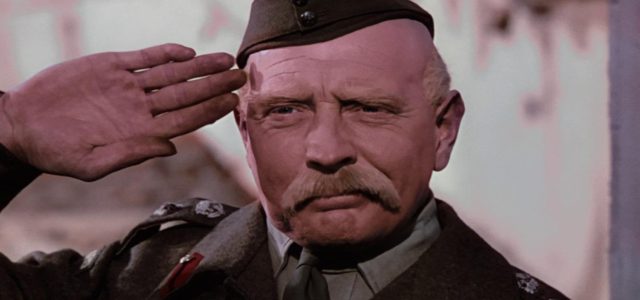
Written, produced, and directed by the visionary duo Michael Powell and Emeric Pressburger (known as “The Archers”), this film is widely considered one of the greatest British achievements in cinema. Shot in glorious Technicolor during the height of World War II, it is a deeply moving, decades-spanning epic about friendship, ageing, and the evolution of “gentlemanly” warfare.
The Synopsis
The story follows the life of Clive Candy, a career British officer, through three different wars: the Boer War, World War I, and the early days of World War II. The film begins with an ageing, portly “Colonel Blimp” figure being “captured” during a training exercise by a brash young soldier. Angered by the breach of protocol, Candy’s mind drifts back forty years to show how he became the man he is.
The heart of the film is the lifelong friendship between Candy and a German officer, Theo Kretschmar-Schuldorff. Having met through a duel of honour in 1902, the two men maintain their bond despite their nations being at war. Alongside this friendship is Candy’s search for his “ideal woman,” represented by three different women he meets at different stages of his life (all played by the same actress). As the world shifts from the chivalrous codes of the 19th century to the “total war” of the 1940s, Candy struggles to reconcile his old-fashioned sense of honor with a modern world that no longer plays by the rules.
Cast & Crew
| Role | Name |
| Directors / Writers | Michael Powell & Emeric Pressburger |
| Clive Candy | Roger Livesey |
| Theo Kretschmar-Schuldorff | Anton Walbrook |
| Edith / Barbara / Angela | Deborah Kerr |
| The Young Soldier | James McKechnie |
Production Notes
-
Winston Churchill’s Opposition: The film was so controversial at the time that Prime Minister Winston Churchill attempted to ban its production and export. He felt the sympathetic portrayal of a German officer and the critique of the British military “old guard” was detrimental to wartime morale.
-
Technicolor Mastery: Cinematographer Georges Périnal used the three-strip Technicolor process to create a rich, symbolic palette. The colours shift as the decades pass, reflecting the changing tone of Clive’s life and the world around him.
-
The “Three” Deborah Kerrs: In a brilliant casting move, a young Deborah Kerr plays all three female leads. This stylistic choice emphasises Clive’s search for a specific romantic ideal and highlights the passage of time.
-
The Duel Scene: One of the most famous sequences in cinema history is the duel between Clive and Theo. Rather than showing the violence, Powell and Pressburger’s camera pulls away and pans up to the snowy roof of the gymnasium, using sound and atmosphere to tell the story—a masterclass in directorial restraint.