
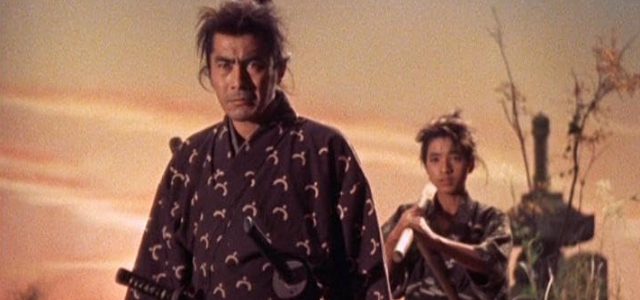
The grand finale of Hiroshi Inagaki’s acclaimed Samurai Trilogy, this film is the definitive cinematic portrayal of Japan’s most famous swordsman. It brings the sweeping saga of Miyamoto Musashi to a close with a blend of poetic beauty and legendary action.
The Synopsis
After years of wandering the countryside as a shugyōsha (warrior on a quest for enlightenment), Miyamoto Musashi has transformed from a wild, hot-headed youth into a refined and disciplined master of the sword. He has abandoned the pursuit of fame for a life of quiet farming and spiritual reflection, hoping to finally find peace.
However, his past—and his reputation—will not let him rest. His rival, the brilliant and flamboyant Sasaki Kojirō, has risen to become a formidable instructor to a powerful Shogun. Kojirō, armed with his signature long blade (the “Laundry-Drying Pole”) and a lethal “Swallow Tail” technique, is obsessed with proving he is the greatest swordsman in Japan. He issues a formal challenge that Musashi cannot ignore.
As the day of the showdown approaches, Musashi must also resolve his long-standing emotional ties to Otsu, the woman who has waited years for him, and Akemi, who is haunted by her own tragic obsession with him. The film builds toward the iconic, sunrise confrontation on the shores of Ganryu Island, a duel that will determine not just who survives, but whose philosophy of the blade is superior.
Cast & Crew
| Role | Name |
| Director | Hiroshi Inagaki |
| Miyamoto Musashi | Toshiro Mifune |
| Sasaki Kojirō | Kōji Tsuruta |
| Otsu | Kaoru Yachigusa |
| Akemi | Mariko Okada |
| Jotaro | Kenjin Iida |
Production Notes
-
The Mifune Legacy: This trilogy cemented Toshiro Mifune as the international face of the samurai. While he played many warriors for Akira Kurosawa, his Musashi is noted for its gradual, decades-long character arc from animalistic to Zen-like.
-
Technicolor Splendor: The film is celebrated for its lush use of colour, particularly during the climactic beach duel, which Inagaki filmed during the “golden hour” to create a strikingly beautiful and atmospheric finale.
-
Historical Iconography: The duel at Ganryu Island is one of the most famous events in Japanese history; this 1956 version established the visual shorthand (such as Musashi arriving late by boat and carving a wooden oar into a sword) that almost every subsequent adaptation has followed.