
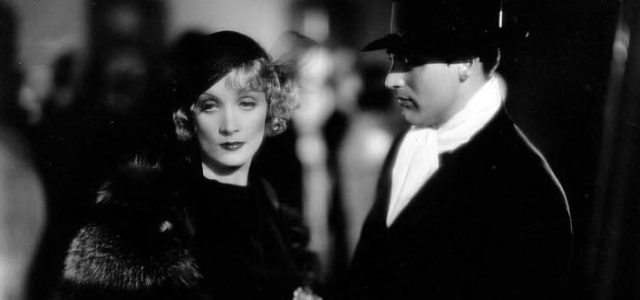
Directed by the visual stylist Josef von Sternberg, Blonde Venus is a lavish Pre-Code melodrama that serves as a quintessential showcase for its leading lady. The film is celebrated for its dreamlike atmosphere, provocative themes, and some of the most iconic musical numbers in cinema history.
The Synopsis
The story follows Helen Faraday, a former German cabaret singer who has retired from the stage to lead a modest, happy life in New York with her husband, Ned, a research chemist, and their young son. The family’s domestic peace is shattered when Ned discovers he has contracted radium poisoning—a condition that will be fatal unless he can afford an expensive, specialised treatment in Germany.
Desperate to save her husband’s life, Helen decides to return to the stage to earn the necessary funds. Under the stage name “Helen Jones,” she becomes a sensation in the nightclub circuit. To secure the rest of the money, she enters into a pragmatic but complicated affair with a wealthy, charismatic politician named Nick Townsend.
When Ned returns from Europe cured, he discovers Helen’s secret, leading to a bitter confrontation. Cast out and fearing the loss of her son, Helen flees, beginning a downward spiral through the gritty underbelly of several cities. The film tracks her transformation from a devoted mother to a cynical fugitive and, eventually, back to a glamorous international star, exploring the staggering personal sacrifices a woman makes in the name of maternal love.
Cast & Crew
| Role | Name |
| Director | Josef von Sternberg |
| Helen Faraday | Marlene Dietrich |
| Nick Townsend | Cary Grant |
| Ned Faraday | Herbert Marshall |
| Johnny Faraday | Dickie Moore |
| Taxi Belle Hooper | Rita La Roy |
Production Notes
-
The “Hot Voodoo” Number: The film features one of Marlene Dietrich’s most famous screen moments: the “Hot Voodoo” musical sequence, where she emerges from a gorilla suit to perform a sultry cabaret number, epitomising the exoticism and gender-blurring style of the von Sternberg/Dietrich collaborations.
-
A Young Cary Grant: This was one of the earliest major roles for Cary Grant. Still in the early stages of his stardom, he provides a smooth, sophisticated foil to the more sombre Herbert Marshall.
-
The Von Sternberg Aesthetic: Like their other films (The Blue Angel, Morocco), the director used intricate lighting and dense set dressing to create a “world of shadows,” prioritising the visual mood and Dietrich’s face over traditional realism.
-
Pre-Code Stakes: Because it was released before the strict enforcement of the Motion Picture Production Code, the film handles themes of infidelity and “fallen women” with a level of nuance and moral ambiguity that would be censored in Hollywood just a few years later.