
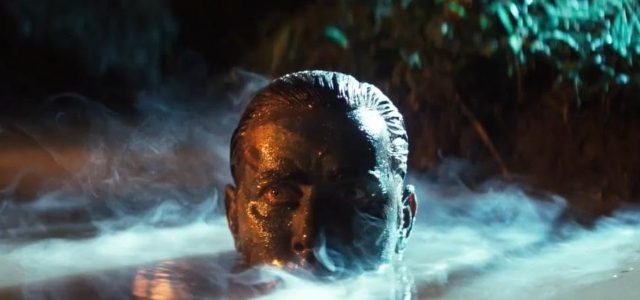
Directed by Francis Ford Coppola, Apocalypse Now (1979) is a visionary descent into the heart of darkness. Inspired by Joseph Conrad’s novella Heart of Darkness, the film reimagines the story against the backdrop of the Vietnam War, creating a surreal, hallucinatory odyssey that explores the thin line between civilization and savagery.
The Premise
The story follows Captain Benjamin L. Willard, a weary and soul-sick Army intelligence officer stationed in Saigon. Willard is given a classified mission that “does not exist, nor will it ever exist”: travel deep into the neutral territory of Cambodia to find and “terminate with extreme prejudice” Colonel Walter E. Kurtz.
Kurtz was once a decorated, “god-like” officer groomed for the highest ranks of the military, but he has since gone rogue. He now leads a private army of montagnard warriors in a remote jungle outpost, operating outside the chain of command and practising “unsound” methods of warfare.
The Conflict
Willard joins the crew of a Navy PBR (Patrol Boat, River) to navigate the Nung River. As the boat moves further upstream, the physical journey mirrors a psychological descent into madness. The mission is punctuated by a series of increasingly bizarre and horrific encounters:
-
The Air Cavalry: A helicopter assault on a coastal village led by the surfboard-obsessed Lt. Col. Bill Kilgore, who views the war as a grand, Wagnerian stage.
-
The PBR Crew: Willard must manage the clashing personalities of his young, terrified crew, including the high-strung “Chef” and the naive “Clean,” as they face invisible snipers and the crushing isolation of the jungle.
-
The Do Lung Bridge: A chaotic, midnight stop at the furthest American outpost, where soldiers fight a war with no officers in charge and no clear objective.
As Willard reads Kurtz’s dossier during the trip, he finds himself increasingly fascinated by the man he is sent to kill. Upon arriving at Kurtz’s compound—a macabre temple of death and ritual—Willard must finally confront the Colonel, who has been waiting for him to arrive and act as his judge, executioner, and witness.
Key Cast and Crew
| Role | Personnel |
| Director | Francis Ford Coppola |
| Captain Benjamin L. Willard | Martin Sheen |
| Colonel Walter E. Kurtz | Marlon Brando |
| Lt. Col. Bill Kilgore | Robert Duvall |
| Photojournalist | Dennis Hopper |
| Jay “Chef” Hicks | Frederic Forrest |
| Tyrone “Clean” Miller | Laurence Fishburne |
Why It’s a Cinematic Masterpiece
-
A Troubled Production: The film is legendary for its disastrous shoot in the Philippines, which included a hurricane, Martin Sheen suffering a heart attack, and Marlon Brando arriving on set significantly overweight and unprepared—struggles famously documented in the film Hearts of Darkness.
-
Sound and Vision: The film’s use of the song “The End” by The Doors and the “Ride of the Valkyries” sequence created some of the most indelible audio-visual associations in cinema history.
-
Cinematography: Shot by Vittorio Storaro, the film uses light and shadow (chiaroscuro) to heighten the sense of mythic tragedy, particularly in the final encounter between Willard and Kurtz.
The film exists in several versions, including the original theatrical cut, the extended Redux (this version), and the Final Cut.