
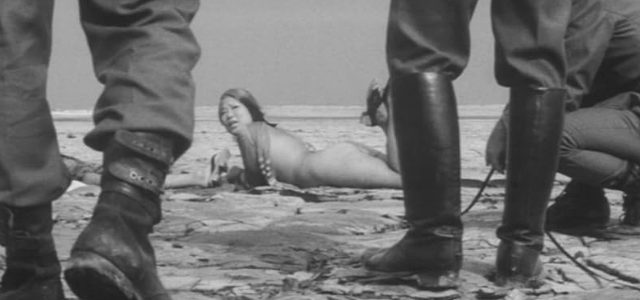
Directed by the visionary Nagisa Ōshima, Japanese Summer: Double Suicide (1967)—originally titled Muri Shinjū: Nihon no Natsu—is a surreal, avant-garde exploration of nihilism, sex, and death during a turbulent era in Japanese history.
The Plot
The story centres on Otoko, a young woman wandering through a scorching, oppressive summer with an insatiable sexual appetite, and Neji, a man she meets who is consumed by a singular, paradoxical desire: to be killed. They are a pair searching for an end, but their “double suicide” is continually deferred by the bizarre world around them.
The duo is eventually swept up by a group of eccentric, heavily armed gangsters who are holed up in a windowless bunker, waiting for a massive shipment of weapons to arrive. Among the outcasts is a mysterious “Foreigner” with a sniper rifle and a collection of cynical criminals. As the group remains trapped in their subterranean hideout, the film dissolves into a fever dream of philosophical debates, erratic violence, and absurdist rituals. Outside, a sniper begins picking people off at random, turning the characters’ internal obsession with death into a literal, external threat.
Key Information
-
Director: Nagisa Ōshima
-
Lead Actors:
-
Keiko Sakurai as Otoko
-
Sunsuke Okada as Neji
-
-
Supporting Cast: Kei Satō, Taiji Tonoyama, and Rokkō Toura.
-
Screenplay: Tsutomu Tamura, Mamoru Sasaki, and Nagisa Ōshima.
Why It’s a Landmark of the Japanese New Wave
-
Political Allegory: While the plot is absurdist, the film acts as a sharp critique of the aimlessness and latent violence of post-war Japanese society.
-
Visual Style: Ōshima utilises stark, high-contrast black-and-white cinematography and a claustrophobic, theatrical staging that mirrors the psychological entrapment of the characters.
-
The “Double Suicide” Trope: The title subverts the traditional Japanese shinjū (lover’s suicide) trope, stripping away the romance and replacing it with a cold, modern existentialism.
Note: Despite the grim subject matter, the film is punctuated by bursts of dark humour and bizarre imagery, making it one of the most unique and challenging entries in Ōshima’s filmography.