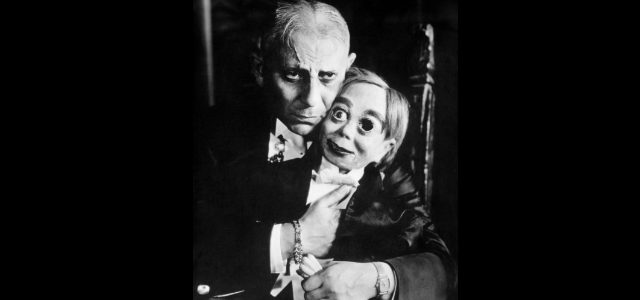
Directed by James Cruze, The Great Gabbo is a fascinating early “talkie” that blends the grandeur of a backstage musical with the psychological dread of a character study. It is perhaps best remembered as the definitive precursor to the “creepy ventriloquist” subgenre of horror and suspense.
The Premise
The film centers on Gabbo, a brilliant but incredibly egotistical ventriloquist whose arrogance alienates everyone around him—including his devoted assistant and love interest, Mary. Gabbo’s only true connection to the world is his wooden dummy, Otto. While Gabbo is cold, harsh, and abrasive, he uses Otto as a vessel to express the warmth, humor, and vulnerability he refuses to show as a man.
As Gabbo’s fame grows and he becomes the star of a massive Broadway revue, his grip on reality begins to loosen. He starts to treat Otto as a living entity, engaging in private conversations with the puppet that reveal his deteriorating mental state. When Mary returns to his life after a long absence, Gabbo’s desperate attempt to win her back triggers a delusional power struggle between the man and his wooden counterpart. The film explores the thin line between a performer’s stage persona and their inner demons, set against a backdrop of elaborate, kaleidoscopic musical numbers.
Key Cast and Crew
-
Director: James Cruze
-
Screenplay: Hugh Herbert (based on the story “The Rival Dummy” by Ben Hecht)
-
Production: Sono Art-World Wide Pictures
| Actor | Role |
| Erich von Stroheim | The Great Gabbo |
| Betty Compson | Mary |
| Donald Douglas | Frank |
| Margie “Babe” Kane | Lucy |
A Performance of Note
The film is a tour de force for Erich von Stroheim, the legendary silent film director and actor. His portrayal of Gabbo’s descent into madness is heightened by the film’s experimental use of sound, which was still a burgeoning technology in 1929. Interestingly, the film originally featured sequences in Multicolor, though most surviving prints are in black and white.