
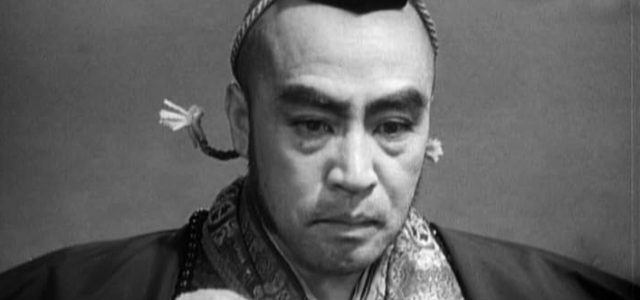
Directed by the legendary Akira Kurosawa, The Men Who Tread on the Tiger’s Tail (Tora no o wo fumu otokotachi) is a fascinating blend of historical drama and tense suspense, based on the famous Kabuki play Kanjinchō.
The Premise
Set in 1185, the film follows the celebrated general Yoshitsune Minamoto as he flees from his treacherous brother, the Shogun, who has ordered his death. To escape, Yoshitsune and his six loyal bodyguards—led by the formidable and fiercely intelligent Benkei—must disguise themselves as humble mountain monks traveling through a high-security mountain pass.
The Conflict
The heart of the film is a psychological battle of wits at the Ataka barrier. The guards at the pass, led by the suspicious Togashi, have been warned that the fugitives may be disguised as monks.
To prove their identity, Benkei must perform a series of “tests” of faith, including reading a fake “subscription list” (Kanjinchō) for a temple that doesn’t exist. The tension is doubled by the presence of a Porter (a character added by Kurosawa for comic relief), whose nervous antics and low-class behavior constantly threaten to reveal the noblemen’s true identities. The title refers to the sheer danger of their situation: one slip-up is equivalent to stepping on the tail of a sleeping tiger.
Key Cast and Crew
| Role | Personnel |
| Director | Akira Kurosawa |
| Benkei | Denjirō Ōkōchi |
| The Porter | Enoken (Ken’ichi Enomoto) |
| Togashi | Susumu Fujita |
| Yoshitsune | Hanshirō Iwai |
Historical Context
This film has a unique history. It was produced toward the end of World War II, but its release was initially delayed. Ironically, it was first banned by the Japanese wartime censors for being “too disrespectful” to tradition, and then later by the American occupation forces for being “too feudal.” It finally saw a wider release in 1952.
Why It Stands Out
At only 59 minutes, it is a lean, expertly paced thriller. Kurosawa’s decision to cast the famous comedian Enoken as the Porter was revolutionary at the time, as it injected a sense of modern irony and human fallibility into a classic, stoic Japanese legend.