
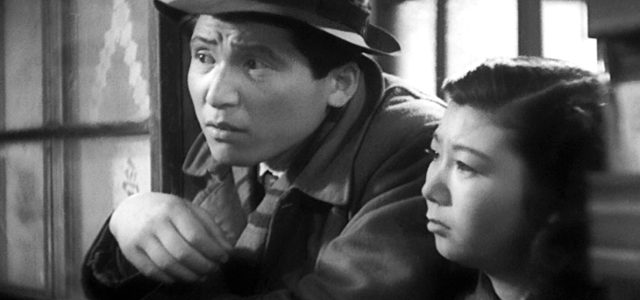
Directed by the legendary Akira Kurosawa, One Wonderful Sunday is a poignant example of Japanese post-war “shomin-geki” (realist films about the working class). Drawing inspiration from the neo-realist movement and the humanistic comedies of Frank Capra, Kurosawa crafts a story that is both a heartbreaking look at poverty and a resilient celebration of the human spirit.
The Synopsis
The story follows Yuzo and his fiancée Masako, a young couple living in the bombed-out ruins of post-war Tokyo. They are only able to see each other once a week, on Sundays, and between them, they possess only 35 yen—a meagre sum that must cover their entire day’s worth of food and entertainment.
As they navigate the devastated city, the film unfolds as a series of bittersweet vignettes. They tour model homes they can never afford, attempt to see a cheap concert only to be thwarted by black-marketeers, and search for a decent place to sit and dream of a future together. Throughout the day, the pessimistic and cynical Yuzo is frequently brought to the brink of despair by their circumstances, while the indomitable Masako uses her imagination and unwavering optimism to keep their hope alive. The film builds to a famous, experimental climax in an empty amphitheatre where the couple attempts to conjure a symphony out of the cold winter wind.
Cast & Crew
| Role | Name |
| Director | Akira Kurosawa |
| Yuzo | Isao Numazaki |
| Masako | Chieko Nakakita |
| Yamamoto | Atsushi Watanabe |
| Dessert Shop Owner | Zekō Nakamura |
| Yamiya (Black-marketeer) | Ichirō Sugai |
Production Notes
-
Breaking the Fourth Wall: The film is widely known for a daring scene near the end where Masako turns directly to the camera and appeals to the audience for their support and compassion—a radical departure from the cinematic conventions of the 1940s.
-
Neo-realist Roots: Shot on location in the real, war-ravaged streets of Tokyo, Kurosawa used unknown actors to ensure a documentary-like authenticity. This allowed the crew to film in public spaces using hidden cameras without drawing crowds.
-
A Personal Project: Kurosawa co-wrote the script with his childhood friend Keinosuke Uekusa. They intentionally avoided depicting the Allied occupation forces, focusing entirely on the internal struggles and small triumphs of the Japanese people as they attempted to rebuild their lives.
-
The Soundtrack of Hope: The film’s emotional core is centred on Franz Schubert’s Unfinished Symphony, which serves as a metaphor for the couple’s incomplete lives and their determination to find beauty in the “unfinished” state of their world.