
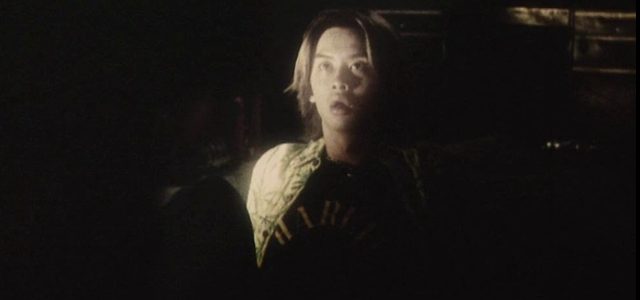
Original title: Kairo
Directed by Kiyoshi Kurosawa, Pulse is a landmark of Japanese horror (J-Horror) that transcends simple scares to offer a profound, chilling meditation on loneliness and the dark side of the digital age. Unlike the “jump-scare” heavy films of the era, it relies on a slow-building, suffocating atmosphere of dread.
The Synopsis
The story is told through two parallel narratives that eventually converge in a desolate, decaying Tokyo.
In the first thread, Michi, a bright young plant shop employee, becomes concerned when a co-worker goes missing. When she visits his apartment, she witnesses a disturbing and inexplicable event that sets off a chain of ghostly disappearances among her circle of friends. In the second thread, a university student named Ryosuke—who is entirely tech-illiterate—signs up for a new internet service provider. His computer begins to act on its own, displaying a haunting website that asks the chilling question: “Do you want to meet a ghost?”
As the two characters investigate these phenomena, they discover that the world of the dead has begun to spill over into the world of the living via the internet. People across the city are vanishing, leaving behind nothing but strange, charcoal-like smudges on walls. The film explores the terrifying idea that as technology connects us more than ever, it simultaneously highlights our fundamental isolation, leading to a world where the boundaries between reality and the void become dangerously thin.
Cast & Crew
| Role | Name |
| Director | Kiyoshi Kurosawa |
| Michi Kudo | Kumiko Asō |
| Ryosuke Kawashima | Haruhiko Kato |
| Harue Karasawa | Koyuki |
| Junko Sasano | Kurume Arisaka |
| Yoshizaki | Shin’ya Tsukamoto |
Production Notes
-
The “Forbidden Room”: The film introduced the iconic trope of the “Forbidden Room”—doors sealed with red tape. This visual became a staple of the genre, symbolising the barrier between the mundane world and a terrifying afterlife.
-
A Different Kind of Ghost: Kurosawa avoided traditional ghosts with long hair and white gowns. Instead, the spirits in Pulse move with an uncanny, stuttering physical grace (often achieved through slowed-down footage) that creates a deeply “uncanny valley” effect.
-
The 2006 Remake: The film was remade in Hollywood in 2006, though fans and critics generally agree that the American version traded the original’s philosophical depth and existential dread for more conventional horror tropes.
-
Philosophical Horror: At its core, Pulse is less about monsters and more about the “clogging” of the afterlife. The film suggests that the realm of the dead is “full,” and the lonely souls are simply looking for a way back into a world that is already forgetting how to connect.