
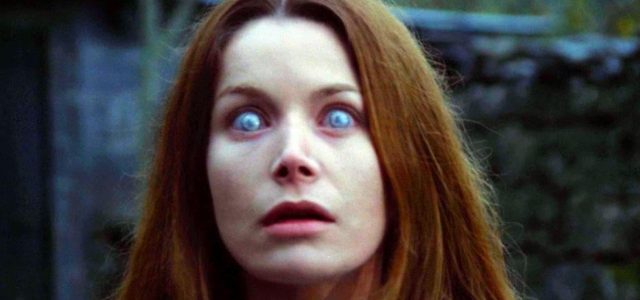
Directed by Jean Rollin, The Grapes of Death (Les Raisins de la Mort) is a seminal entry in French horror, often cited as one of the first “gore” films in the country’s cinema. While Rollin was primarily known for his surrealist, dreamlike vampire films, this 1978 production offers a more visceral, bleak take on the “environmental apocalypse” subgenre.
The Premise
The story follows a young woman named Elisabeth (Marie-Georges Pascal) who is traveling by train to meet her fiancé at his vineyard in the idyllic French countryside. However, her journey turns into a nightmare before she even arrives. A new pesticide, sprayed on the local grapes to protect the harvest, has a horrific side effect on the local population: it causes their skin to rot and their minds to fracture into a state of homicidal madness.
The Conflict
As Elisabeth navigates the rural landscape, she finds that the tranquil villages have become death traps. The infected—”living corpses” who are aware of their own physical decay—roam the hillsides in a mindless, agonizing rage. Elisabeth must find a way to survive the onslaught while searching for her fiancé, only to realize that the source of the plague is the very wine and land she was traveling toward.
The film focuses on her desperate flight through a series of increasingly grim encounters with survivors, including a blind girl and a group of terrified villagers, as the social order of the countryside completely disintegrates.
Key Cast and Crew
-
Director: Jean Rollin
-
Elisabeth: Marie-Georges Pascal
-
Lucie: Bridget Lahaie
-
The Blind Girl: Annie Belle
-
Paul: Félix Marten
Notable Elements
-
Atmospheric Horror: Unlike the fast-paced zombie films of the era, Rollin maintains his signature melancholic, poetic atmosphere. The horror is found in the contrast between the beautiful, sunny vineyards and the grotesque physical decomposition of the people who tend them.
-
Social Critique: The film serves as a grim cautionary tale regarding industrial interference with nature. It taps into late-70s anxieties about chemical pollutants and the hidden dangers of modern agricultural practices.
-
Visual Style: Using a muted palette and a haunting score, Rollin creates a sense of “quiet” doom. The film is famous for its stark, gritty makeup effects that emphasize the pain and misery of the infected rather than just the shock value of their violence.
Why It Resonates
The Grapes of Death is a transitional film that bridges the gap between the poetic horror of the 1960s and the “splatter” era of the 1980s. It remains a cult favorite for its ability to balance Rollin’s art-house sensibilities with the visceral demands of a contagion thriller.