
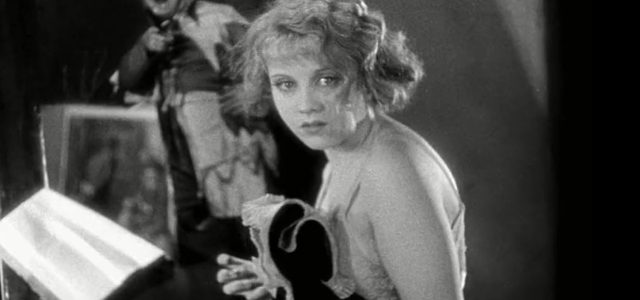
Directed by the “Master of Suspense,” Alfred Hitchcock, Blackmail is a landmark in cinematic history. It holds the distinction of being Britain’s first “all-talkie” feature film, originally starting production as a silent movie before Hitchcock adapted it to embrace the new era of sound.
The Synopsis
The story follows Alice White, the daughter of a London shopkeeper, who is dating Frank Webber, a detective at Scotland Yard. After a petty argument with Frank one evening, Alice impulsively decides to meet a charming artist for a late-night visit to his studio. However, the evening takes a dark and violent turn when the artist attempts to force himself on her, leading Alice to kill him in a moment of desperate self-defence.
Dazed and guilt-stricken, Alice flees the scene, unaware that she has left behind incriminating evidence. When Frank is assigned to the murder case, he quickly realises Alice’s involvement and attempts to protect her by concealing clues. Their secret is soon threatened, however, by the arrival of a shifty petty criminal named Tracy, who witnessed Alice leaving the artist’s apartment. Tracy begins a ruthless game of extortion, leading to a high-tension pursuit through the British Museum as the boundaries between justice, crime, and survival become dangerously blurred.
Cast & Crew
| Role | Name |
| Director | Alfred Hitchcock |
| Alice White | Anny Ondra |
| Frank Webber | John Longden |
| The Artist | Cyril Ritchard |
| Tracy (The Blackmailer) | Donald Calthrop |
| Mrs. White | Sara Allgood |
Production Notes
-
The Sound Revolution: Because lead actress Anny Ondra had a thick Czech accent that didn’t fit the role of a London girl, Hitchcock had actress Joan Barry stand off-camera to read Alice’s lines into a microphone while Ondra lip-synced—a precursor to modern dubbing.
-
A Cinematic First: The film features Hitchcock’s first truly iconic “set-piece” finale, utilising the roof and interior of the British Museum. Due to lighting constraints in the museum, Hitchcock used the Schüfftan process (a clever arrangement of mirrors and miniatures) to create the illusion of the massive scale.
-
Technical Ingenuity: Hitchcock used sound subjectively rather than just realistically. In one famous scene, Alice hears a neighbour gossiping about the murder, and the word “knife” is amplified and distorted to reflect Alice’s spiralling internal panic.