
Original title: Sasameyuki
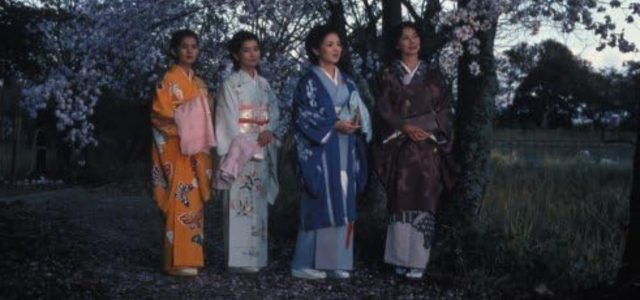
Directed by the legendary Kon Ichikawa, this visually breathtaking film is an adaptation of Jun’ichirō Tanizaki’s classic novel. Often described as a “symphony of kimonos,” it is a meditative and lush portrait of a vanishing world, set in the years leading up to the Pacific War.
The Synopsis
The story centres on the Makioka family, once-wealthy shipbuilders from Osaka whose social standing is slowly declining. The narrative follows the four Makioka sisters—Tsuruko, Sachiko, Yukiko, and Taeko—as they navigate the tension between ancient tradition and the encroaching modern world.
The primary conflict involves the family’s tireless efforts to find a suitable husband for the third sister, the painfully shy and conservative Yukiko. According to strict family tradition, the youngest sister, the rebellious and modern Taeko, cannot marry until Yukiko is wed. As the seasons change—marked by the sisters’ annual, ritualistic gathering to view the Kyoto cherry blossoms—a series of failed matchmaking attempts and internal family scandals unfold. Through these intimate domestic dramas, the film captures the “light snowfall” (the literal translation of the Japanese title) of a lifestyle and a class of people quietly drifting into history.
Cast & Crew
| Role | Name |
| Director | Kon Ichikawa |
| Tsuruko (The Eldest) | Keiko Kishi |
| Sachiko (The Second) | Yoshiko Sakuma |
| Yukiko (The Third) | Sayuri Yoshinaga |
| Taeko (The Youngest) | Yūko Kotegawa |
| Teinosuke (Sachiko’s Husband) | Kōji Ishizaka |
| Tatsuo (Tsuruko’s Husband) | Jūzō Itami |
Production Notes
-
Visual Grandeur: The film is renowned for its extraordinary cinematography and costume design. Ichikawa uses the vibrant colours of the sisters’ kimonos and the natural beauty of the Japanese landscape to create a sense of high-art aesthetics.
-
A Late-Career Masterpiece: Released when Ichikawa was 67, the film was a major critical and commercial success, proving his continued mastery of the medium and his ability to translate dense literature into a cinematic experience.
-
Cultural Preservation: Beyond the plot, the movie serves as a meticulous record of pre-war Japanese customs, dialects (specifically the elegant Osaka-Kyoto register), and social etiquette, preserving a specific cultural moment on film.