
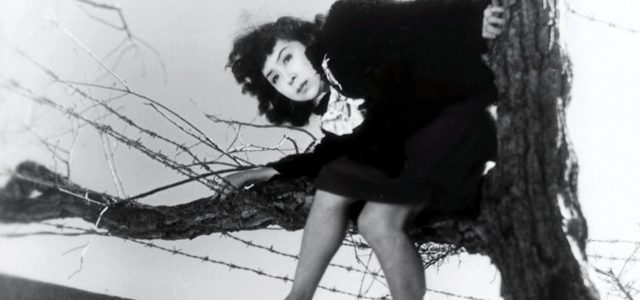
Original title: Yoru no onnatachi
Directed by Kenji Mizoguchi, Women of the Night is a raw, unflinching work of Japanese realism (neorealism). Filmed among the actual ruins of post-WWII Osaka, the movie serves as a brutal critique of the desperation and social collapse faced by women in a defeated nation.
The Synopsis
Set against the backdrop of a bombed-out city, the story follows the interconnected lives of several women who are forced into the “dark” world of street prostitution to survive. The narrative primarily focuses on Fusako, a woman who has lost her husband to the war and her child to illness. Following a series of personal betrayals and the disintegration of her family structure, Fusako eventually finds herself on the streets.
She is joined by her younger sister, Natsuko, and their sister-in-law, Kumiko, each of whom represents a different path toward the same tragic destination. The film avoids melodrama, instead presenting a clinical and deeply empathetic look at the physical dangers, medical risks, and social stigma these women endure. As they navigate a world of black markets, predatory men, and harsh police raids, the film examines whether solidarity can exist among those whom society has deemed “fallen.”
Cast & Crew
| Role | Name |
| Director | Kenji Mizoguchi |
| Fusako | Kinuyo Tanaka |
| Natsuko | Sanae Takasugi |
| Kumiko | Mitsuo Nagata |
| Renzo | Tomimoto Teruo |
| The Doctor | Kumeko Urabe |
Production Notes
-
Location Realism: Mizoguchi insisted on filming in the real slums and hospitals of Osaka. The grittiness of the setting—actual rubble and crowded, dilapidated clinics—adds a documentary-like weight to the performances.
-
The Tanaka Transformation: This film marks another landmark collaboration between Mizoguchi and his muse, Kinuyo Tanaka. Her performance is notable for its ferocity and lack of vanity, particularly in the film’s famous, visceral climactic confrontation in a ruined church.
-
Political Context: The film was released during the Allied Occupation of Japan. It was a bold statement against the hypocrisy of the era, highlighting how the “New Japan” was still built on the exploitation of its most vulnerable citizens.
-
Stylistic Shift: While Mizoguchi is known for his “scroll-like” long takes, Women of the Night features a more aggressive, jagged editing style that mirrors the chaotic and fractured lives of the protagonists.